Why does one contractor’s estimate for your driveway look like a bargain while another feels like a down payment on a second home? It’s the central question every homeowner asks when they start researching how much does paver installation cost in the San Francisco Bay Area. You likely already suspect that our region’s high cost of living and specialized labor market push local rates significantly higher than the rest of the country. It’s also natural to feel overwhelmed by the choice between standard concrete and high-end porcelain, especially when you’re worried about hidden fees or subpar engineering buried beneath the surface.
We promise to eliminate that anxiety by providing a transparent, expert analysis of the 2026 market. You’ll gain a clear understanding of the variables that dictate project totals, from site drainage requirements to the long-term protection of a professional 25-year warranty. This breakdown examines why the structural base is your most important investment and gives you the tools to evaluate any contractor quote with absolute confidence.
Key Takeaways
- Understand the three structural pillars of 2026 pricing: high-grade material selection, specialized labor rates, and the rigorous site engineering required for Bay Area conditions.
- Learn how much does paver installation cost by analyzing the 40/40/20 budget split between materials, professional labor, and the critical “invisible investment” of base preparation.
- Identify site-specific variables like East Bay clay and property slopes that require deeper excavation or retaining walls to ensure your hardscape remains level for decades.
- Compare the perceived savings of DIY projects against the lifetime value of professional installation, factoring in expensive equipment rentals and structural protection.
- Recognize the financial security of all-inclusive pricing and dedicated project management to avoid the hidden fees often found in traditional, fluctuating estimates.
Understanding the Foundation of Paver Installation Costs in 2026
Determining how much does paver installation cost requires looking far beyond the price per pallet. Every successful project rests on three critical pillars: high-performance materials, specialized labor, and precision site engineering. In 2026, baseline pricing is shaped by rising fuel costs for heavy machinery and a highly competitive market for skilled hardscape technicians. You aren’t just paying for a surface; you’re paying for a controlled, repeatable system that ensures long-term stability. Understanding these foundational elements is the first step in moving from a vague estimate to a secure financial commitment.
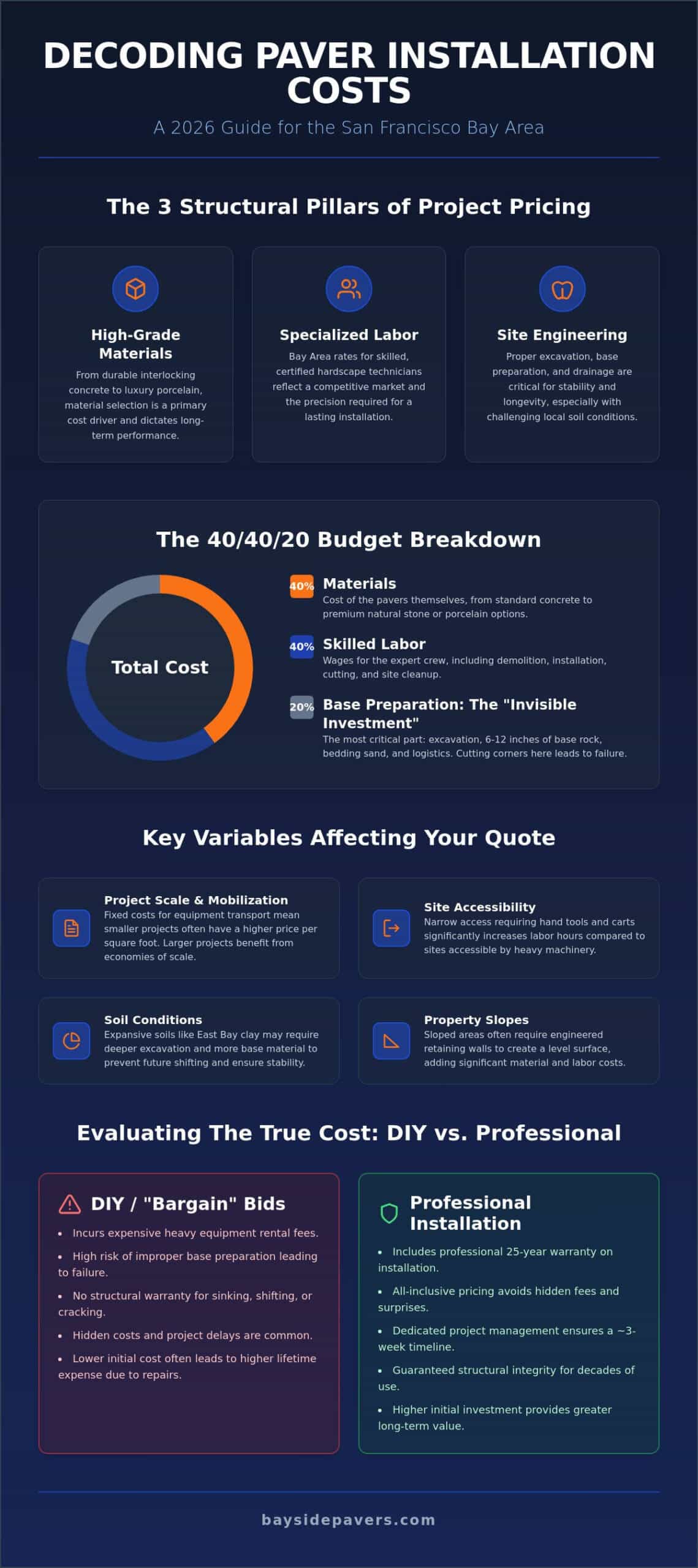
A common misconception is that a 200 sq. ft. patio should cost exactly half of a 400 sq. ft. project. This logic fails to account for fixed overhead. Mobilization fees are the fixed costs associated with transporting heavy equipment and professional crews to a job site. Whether your project is large or small, the cost of moving excavators, staging materials, and managing logistics remains relatively constant. This is why smaller projects often carry a higher cost per square foot than expansive installations.
The Impact of Project Scale and Accessibility
Accessibility changes everything. If our crews have to move tons of base rock through a narrow side yard in Walnut Creek using hand carts rather than a skid steer, labor hours will climb. These logistical hurdles are a primary driver of price variance between similar properties. Conversely, larger driveways often benefit from economies of scale. Once the equipment is on-site and the perimeter is set, the incremental cost of adding square footage often decreases because the fixed mobilization costs are spread over a larger area.
Material Tiers: From Standard Concrete to Luxury Porcelain
Materials fall into three distinct categories that dictate the project’s aesthetic and durability. Standard interlocking concrete paver options provide a durable, budget-friendly foundation. Mid-range natural stones offer unique textures, while premium selections represent the top tier of the market. For a deep dive into high-end options, see our Porcelain Paver Installation in the Bay Area: 2026 Comparison Guide. The physical weight of your chosen material also dictates the pace of the work. Large-format porcelain or heavy natural stone slabs require specialized suction lifting tools and precision cutting equipment. These factors add layers of complexity to the logistical reality of your project, influencing how much does paver installation cost for your specific layout.
Focus on the total cost of ownership. A cheap installation that fails after three winters costs significantly more than a professional job that lasts 25 years. We view every project as a long-term investment in your property’s value and functionality. By prioritizing structural integrity and high-quality materials, you eliminate the hidden fees associated with future repairs and premature failure.
The Square Foot Breakdown: Materials vs. Labor vs. Preparation
A professional quote isn’t a single arbitrary number; it’s a calculated breakdown of resources and engineering. To understand how much does paver installation cost, you must look at the standard budget allocation used by top-tier contractors. Generally, your investment splits into three distinct categories: 40% for materials, 40% for skilled labor, and 20% for site preparation and logistical overhead. This transparency allows you to see exactly where your money goes. It also explains why “cheap” quotes usually cut corners in the 20% allocated to preparation, which is the most dangerous place to save money.
The “Invisible Investment” refers to the 6 to 12 inches of base rock and bedding sand required beneath your pavers. While you won’t see this material once the project is finished, it’s the only thing preventing your driveway from sinking or shifting. Intricate patterns also influence the final price. A simple running bond pattern is efficient, but a herringbone design requires significantly more labor and results in higher material waste due to the complex cuts required at every edge. Our disciplined project management ensures we hit a 3-week completion timeline, keeping your project on track and within the agreed budget.
Labor Intensity and Local Market Rates
Bay Area labor rates reflect the high cost of specialized licensing and comprehensive insurance required to operate in California. Our technicians don’t just lay stones; they perform high-precision masonry work. For example, hand-cutting pavers to fit the radius of a curved path or a complex pool deck requires hours of meticulous saw work. This level of craftsmanship ensures a seamless finish that off-the-shelf estimates often overlook. For a more granular look at these variables, you can review our Driveway Paver Cost Per Square Foot: 2026 Bay Area Pricing Guide.
Base Preparation: The Non-Negotiable Cost
Skipping geotextile fabric or rushing the compaction process is a recipe for project failure. We use industrial-grade plate compactors to ensure the base is rock-solid. In Northern California, dirt disposal fees are a significant factor in your total cost. Hauling away tons of excavated soil is a logistical hurdle that requires dedicated trucks and disposal permits. Standard base preparation differs significantly from permeable paver systems, which require deeper excavation and specific layers of open-graded stone to manage drainage. If you want to ensure your project is built to last, choosing a professional paver installation is the most reliable way to protect your investment.
Site-Specific Variables: Why Your Neighbor’s Quote Might Be Different
Comparing your project estimate to a neighbor’s can lead to unnecessary confusion. In the Bay Area, two identical-looking patios can have vastly different price points because the most expensive work happens underground. When you ask how much does paver installation cost, you must account for the unique geological and regulatory landscape of your specific zip code. A project in the flatlands of Pleasanton faces entirely different engineering challenges than one perched on a hillside in Orinda.
The “East Bay Clay” factor is a primary driver of cost variance. Expansive clay expands when wet and shrinks when dry, necessitating a thicker aggregate base to prevent the surface from buckling. If your property sits on this type of soil, a standard 6-inch base won’t suffice. Our crews must excavate deeper and import more crushed rock to create a stable foundation that resists seasonal soil movement. This extra labor and material ensure your investment doesn’t shift after the first heavy winter.
Soil Conditions and Engineering Requirements
We don’t guess when it comes to structural integrity. Soil testing informs the precise depth of the sub-base, ensuring we meet local engineering standards. In hilly areas like Lafayette or Orinda, stabilizing the terrain is often the first phase of any hardscape project. If your yard has a significant grade, a simple patio often requires a retaining wall installation to create a level, usable space. These structural additions increase the initial quote but are essential for preventing erosion and surface failure.
Drainage and Runoff Management
California’s weather patterns, characterized by long dry spells followed by intense atmospheric rivers, dictate specific runoff solutions. Proper drainage is a non-negotiable requirement for protecting your home’s foundation. We often integrate specific components to manage water flow:
- French Drains: Perforated pipes surrounded by gravel to redirect groundwater.
- Catch Basins: Grated boxes that collect surface runoff and channel it into pipes.
- Surface Grading: Precision sloping of the sub-base to ensure water moves away from the house.
For homeowners looking for the ultimate in property protection, permeable paver installation offers a sophisticated way to manage heavy rainfall on-site. You can find more details on integrating these systems in our Hardscape Design and Installation: The Complete 2026 Homeowner’s Guide.
Local jurisdictions also play a role in the final price. Permitting costs and requirements in cities like Concord or San Ramon vary significantly. Some municipalities require specific drainage calculations or site inspections before work begins. We handle these administrative hurdles as part of our comprehensive management process, ensuring your project is fully compliant with local building codes. This level of oversight prevents the costly fines and delays that often plague unpermitted work.
Evaluating the True Cost of DIY vs. Hiring a Professional Hardscape Contractor
The temptation to tackle a hardscape project yourself is often driven by a desire to lower how much does paver installation cost by removing labor fees. This calculation usually overlooks the logistical reality of professional construction. A DIY approach shifts the financial burden from a fixed contract to a variable list of equipment rentals, material waste, and potential repair costs. While you might save on the initial invoice, the lifetime cost of a failed installation often exceeds the price of hiring a specialist from the start.
Professional results require professional tools. A standard homeowner’s garage lacks the heavy-duty machinery necessary for a stable build. You’ll need to budget for several specialized rentals:
- Industrial Plate Compactors: Essential for reaching the required soil density.
- High-Speed Masonry Saws: Needed for precision cuts that prevent gaps and shifting.
- Mini-Excavators: Required for the deep digging mentioned in previous sections.
Without these tools, achieving the necessary compaction is nearly impossible. Industry data suggests that 90% of DIY paver projects fail at the base layer within the first three years. These failures aren’t just cosmetic; they represent a total loss of the materials and effort invested.
The Hidden Expenses of DIY Projects
Material logistics frequently derail DIY budgets. Small residential orders often incur significant delivery fees and lack the wholesale pricing available to licensed contractors. You must also account for material waste. Inexperienced cutting can lead to a 15% to 20% waste factor, compared to the 5% seen in professional builds. Perhaps the most significant cost is your own time. A project that takes our crew three weeks to complete often stretches into three months for a homeowner. This extended timeline increases the risk of property damage, such as hitting unmarked utility lines or creating improper grading that leads to basement flooding.
The Value of a 25-Year Hardscape Warranty
A professional installation is a protected investment. We provide a 25-year warranty that serves as a financial safeguard against shifting, settling, or material defects. This protection is only possible because our dedicated project managers oversee every phase of the build to ensure it meets rigorous engineering standards. If you’re looking for an expert paver contractor in San Mateo County, choosing a team that stands behind their work is the most effective way to eliminate long-term financial risk. You aren’t just buying pavers; you’re buying the peace of mind that comes with a permanent, guaranteed solution.
Before you commit to a DIY path, consider the value of your weekends and the security of your property. If you want to ensure your hardscape adds value to your home without the threat of future failure, booking a professional pavers installation is the most reliable way to secure your investment.
Navigating All-Inclusive Pricing and Long-Term Hardscape Value
Homeowners often find themselves frustrated by “estimates” that fluctuate as soon as the first shovel hits the ground. In a volatile market, determining how much does paver installation cost shouldn’t be a guessing game. We distinguish ourselves by moving away from variable estimates toward Upfront All-Inclusive Pricing. This model eliminates the typical anxieties associated with hidden fees and mid-project price hikes. By conducting a rigorous initial analysis, we provide a final number that accounts for the logistical realities of your specific property.
A dedicated project manager is central to this value proposition. Many contractors leave communication to the crew on-site, which leads to costly delays and technical errors. Our project managers serve as a single point of accountability. They coordinate material deliveries, manage municipal permits, and ensure the 3-week timeline remains intact. This disciplined oversight reduces the risk of expensive rework and ensures the final result matches the engineered design perfectly.
Fixed-Price Models vs. Variable Estimates
There is immense peace of mind in knowing your final financial commitment before construction begins. Our all-inclusive model is comprehensive. It covers everything from the initial demolition and dirt disposal to the final cleanup and sealer application. We account for contingencies, such as soil stabilization or drainage adjustments, during the design consultation rather than adding them to your bill later. This transparency allows you to budget with certainty, knowing that labor, materials, and permits are fully locked in.
Investing in the Future of Your Outdoor Living Space
In the 2026 Bay Area real estate market, professional hardscaping is a strategic home equity investment. High-quality outdoor living spaces significantly increase property values, often yielding a high return on investment compared to interior remodels. Prospective buyers in regions like Silicon Valley or the North Bay prioritize durable, low-maintenance curb appeal. A professionally installed driveway or patio isn’t just a surface; it’s a structural asset that enhances the long-term marketability of your home.
The lowest bid is often the most expensive in the long run. When a contractor offers a price significantly below the market average, they’re usually sacrificing the “invisible investment” of base preparation or the security of a comprehensive warranty. These shortcuts lead to sinking, cracking, and eventual total failure. Choosing a partner that prioritizes engineering and transparency is the only way to ensure your hardscape remains a permanent improvement to your property. Ready for a transparent quote? Schedule your free design consultation with Bayside Pavers today.
Secure Your Hardscape Investment for 2026
Understanding how much does paver installation cost is about more than just square footage; it’s about the precision of the engineering beneath the surface. We’ve explored how regional factors like expansive clay and property slopes require a disciplined approach to excavation and base preparation. By prioritizing structural integrity over the lowest bid, you protect your home from the common failures of shifting and settling. Your outdoor living space should be a permanent asset, not a recurring expense that requires constant repair.
Our system is designed to provide complete peace of mind through a dedicated project manager and a typical 3-week completion timeline. Every build we execute is backed by a 25-Year Warranty, ensuring your investment remains stable for decades. We eliminate the stress of fluctuating estimates with our transparent, all-inclusive pricing model. This approach ensures that you know your final commitment before the first shovel hits the ground. Take the next step toward a beautiful, durable property with confidence.
Get Your All-Inclusive Paver Installation Quote and start building a space that stands the test of time.
Frequently Asked Questions
What is the average cost per square foot for paver installation in the Bay Area?
Project costs vary based on site accessibility, soil conditions, and the specific material selection. In the Bay Area, local rates are consistently higher than national averages due to specialized labor markets and strict engineering requirements. When calculating how much does paver installation cost, you must factor in the high cost of living and the rigorous seismic standards required across Northern California. Every property is unique, so a flat average rarely reflects the logistical reality of your specific project.
Does the type of paver material significantly change the total project price?
Material choice is one of the primary drivers of your total project investment. Standard concrete pavers are efficient and durable, while luxury porcelain or natural stone slabs require specialized handling and precision cutting tools. These premium materials are often heavier and more fragile, which increases the labor hours required for a flawless installation. Choosing a higher-tier material changes both the aesthetic outcome and the engineering requirements of the sub-base beneath it.
Are there hidden costs like permits or soil disposal I should watch out for?
Homeowners should always account for municipal permitting fees and soil disposal costs. In cities like San Jose or San Francisco, permit requirements for drainage and runoff can add to the initial budget. Dirt disposal is another major factor; hauling away tons of excavated Bay Area clay involves significant trucking and landfill fees. Our all-inclusive pricing model incorporates these administrative and logistical hurdles so there are no financial surprises after the project begins.
How much more do permeable pavers cost compared to standard pavers?
Permeable paver systems generally require a higher initial investment than standard interlocking pavers. This is because they involve a more complex sub-surface drainage system, including deeper excavation and multiple layers of open-graded stone. While the upfront cost is higher, they provide superior runoff management and long-term property protection. This is an essential consideration for properties with specific drainage challenges or those subject to local environmental regulations regarding water runoff.
Can I save money by doing the demolition and excavation myself?
Attempting DIY demolition or excavation often leads to higher long-term expenses rather than actual savings. Professional grading requires extreme precision to ensure water flows away from your foundation. If the sub-grade is off by even an inch, the entire project is at risk of structural failure. When you factor in the cost of mini-excavator rentals and the risk of hitting underground utility lines, hiring a specialized team is the more secure financial decision.
Why is professional labor so much more expensive than a general handyman?
Professional labor includes the cost of specialized licensing, comprehensive insurance, and high-precision masonry expertise. A general handyman often lacks the industrial-grade compactors and masonry saws required to meet 25-year structural standards. Our technicians follow a controlled, repeatable system for success that ensures your driveway doesn’t sink under the weight of a vehicle. You’re paying for a guaranteed outcome and the security of a project manager who oversees the entire lifecycle.
Does a paver driveway cost more than a concrete one in the long run?
Pavers offer significantly better long-term value than standard poured concrete. While concrete slabs often crack due to soil movement or seismic activity, individual pavers can be replaced or reset without disturbing the rest of the surface. This flexibility makes repairs much more affordable over the lifespan of the driveway. Additionally, the enhanced curb appeal of a paver driveway contributes to higher home equity, making it a smarter investment for Bay Area homeowners.
What happens if my pavers shift or sink after a few years?
Shifting or sinking is typically a sign of base layer failure or improper compaction. If this happens, a professional team must lift the affected pavers, re-compact the sub-base, and reset the stones. This is why we provide a 25-year warranty on all our builds. It acts as a financial safeguard, ensuring that any structural issues are addressed without additional cost to the homeowner. It is the ultimate protection for your hardscape investment and provides long-term peace of mind.

Article by
Adriana Esposito
Adriana Esposito is the owner of Bayside Pavers, a woman-owned outdoor living company serving the San Francisco Bay Area. With over 16 years of experience, she specializes in designing and building custom paver patios, driveways, outdoor kitchens, retaining walls, artificial turf, and other outdoor living spaces. Through this blog, she shares expert tips, design inspiration, and practical advice to help homeowners create beautiful, lasting outdoor spaces.