A paver patio in the Bay Area isn’t just a landscaping project; it’s a complex engineering project in disguise. You’ve likely already noticed the wildly inconsistent quotes for paver installation bay area projects, leaving you to wonder why one bid is double the price of another. It’s frustrating to face the fear that our region’s expansive clay soil will turn your investment into a wavy, shifting mess after the first rainy season. You deserve a predictable process that results in a level, beautiful outdoor space without the threat of hidden costs surfacing halfway through the build.
This 2026 buyer’s guide eliminates that uncertainty. We’ll show you exactly how to navigate material selection and site preparation to ensure a lifetime of durability for your hardscape. You’ll learn how to vet contractor quotes, manage engineering for soil stability, and select materials that increase your home’s market value. We’re providing a clear roadmap to a project that delivers a fixed-price contract and a guaranteed three-week completion window. By the end of this article, you’ll have the technical knowledge to demand a high-end result that provides total peace of mind.
Key Takeaways
- Recognize professional paver installation as a multi-layered structural system engineered for climate resilience rather than just a decorative surface.
- Decode inconsistent contractor quotes by identifying the specific engineering and material components required for a lifetime of durability.
- Identify the critical sub-base requirements needed to protect your hardscape from the shifting and rutting caused by expansive clay soil.
- Compare the performance of porcelain, natural stone, and concrete pavers based on 2026 trends in heat retention and slip resistance.
- Navigate the streamlined three-step process for a paver installation bay area project to guarantee a three-week completion window.
Understanding Paver Installation in the Bay Area
Professional paver installation bay area projects are often misunderstood as simple surface upgrades. In reality, a high-quality hardscape is a sophisticated, multi-layered structural system. It begins far below the visible stone with precise excavation and a multi-stage compaction process. This foundation ensures the final layer remains level and stable for decades. By 2026, homeowners in Northern California have recognized that professional hardscaping is one of the most reliable ways to increase property value. A well-executed driveway or patio provides an immediate boost to curb appeal and functional square footage.
Beneath the surface, modern systems rely on interlocking technology rather than the rigid, mortared methods seen in the History of paving stones. While mortared stone is prone to cracking as the ground shifts, interlocking pavers are designed to distribute weight and movement across the entire surface. This is critical in the Bay Area. Our climate cycles between bone-dry summers and saturated, wet winters. These moisture swings cause soil to expand and contract. This movement can destroy inferior installations within a single season, making a flexible system essential for longevity.
Why Pavers Outperform Poured Concrete in California
Choosing pavers over poured concrete is a strategic decision for California properties. Poured concrete is a rigid slab. When the Bay Area experiences minor seismic tremors or significant soil settling, concrete has no choice but to crack. These cracks are permanent and expensive to patch; they often leave unsightly scars. Pavers offer a flexible alternative. Because the system consists of individual units, it can shift slightly without losing structural integrity. If a repair is ever necessary, you simply replace the affected stones. You don’t have to jackhammer a whole driveway to fix one small area.
The 2026 Trend: Permeable Pavers and Sustainability
Sustainability is no longer an afterthought in 2026. Permeable paver installation has become a dominant trend because it manages California stormwater runoff effectively. These systems allow water to filter through the joints and back into the ground rather than flooding city storm drains. This prevents pooling on your driveway during heavy rain seasons and helps recharge local groundwater. Many Bay Area municipalities now offer incentives or rebates for eco-friendly hardscaping to manage runoff. It’s a practical choice that combines environmental responsibility with superior drainage performance.
The Cost of Quality: Decoding Bay Area Paver Quotes
Homeowners often face a confusing “Reddit Gap” when seeking paver installation bay area services. You might see one quote for $5,000 and another for $12,000 for the same square footage. It’s tempting to choose the lower number, but these figures rarely represent the same level of service. A professional quote is a comprehensive document. It accounts for deep excavation, high-grade base rock, bedding sand, the pavers themselves, and skilled labor. When a quote is suspiciously low, the contractor is usually cutting corners on the foundation or leaving the logistical burden entirely on your shoulders. Understanding how much does paver installation cost in the Bay Area requires examining each line item in a quote to identify what engineering and material components are actually included.
Cost factors are also heavily influenced by modern engineering requirements. For instance, following Permeable paver design trends requires specific aggregates and deeper excavation than standard installations. These technical details are often omitted from “budget” quotes but are vital for long-term performance in Northern California’s climate. If you want to see how a transparent quote looks, you can request a detailed project breakdown from our team.
Labor-Only vs. Full-Service Hardscape Contractors
Labor-only contracts appeal to the budget-conscious, but they introduce significant risks and hidden costs. In these arrangements, you act as the project manager. You must handle the following tasks yourself:
- Securing municipal permits and navigating local zoning laws.
- Coordinating debris hauling and expensive dump fees.
- Ordering and scheduling material deliveries, which often include multi-ton loads of rock and sand.
Professional full-service contractors have established relationships with local quarries. They secure better rates on premium materials and ensure the base rock meets specific density standards. Additionally, full-service firms carry the necessary insurance to protect your property during construction. Just as busy medical professionals rely on ClicFone Télésecrétariat to manage their critical patient communications, choosing a full-service hardscape partner ensures every logistical detail is handled by an expert. The true cost of a project is the total investment divided by its years of service.
Fixed-Price Contracts vs. Estimates
The word “estimate” is a red flag in the construction industry. It implies a flexible number that can increase once the shovel hits the ground. Unexpected “surprises” like hidden roots, old concrete, or poor soil quality shouldn’t result in a higher bill for the homeowner. We replace the traditional estimate with a fixed-price model to eliminate financial anxiety. This approach locks in the total cost before any work begins. Our all-inclusive pricing covers everything from the initial design and permitting to the final walkthrough and our 25-year warranty. You deserve a partner that takes full ownership of the budget and the timeline from day one.
Engineering for Stability: Managing Bay Area Clay Soil
In cities like Concord and Walnut Creek, the ground beneath your feet is constantly moving. Expansive clay soil is the primary enemy of level driveways and patios across the region. This soil type acts like a sponge; it swells significantly during wet winters and shrinks during dry summers. If your contractor ignores these local conditions, your investment will suffer. Improper sub-base preparation leads to “rutting,” where tire tracks sink into the surface, and uneven pavers within just two years. Achieving a lifetime of durability for your paver installation bay area project requires an engineering-first approach that accounts for this subterranean movement.
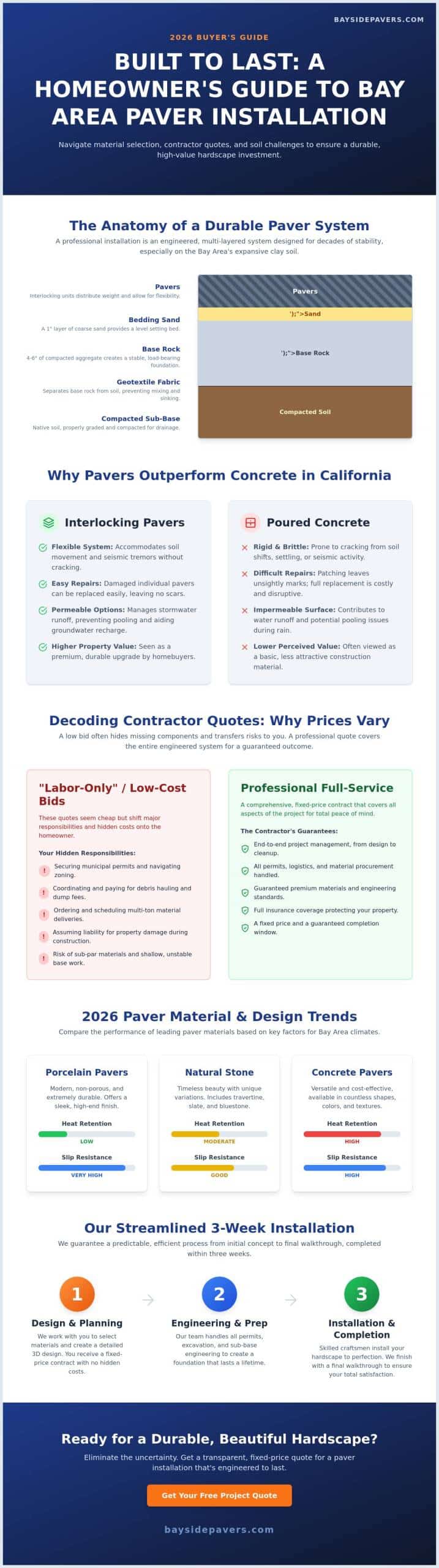
The first step in our repeatable system is deep excavation. We don’t guess at depths. For a standard driveway, we excavate 10 to 12 inches to ensure enough room for a heavy-duty structural base. Patios typically require 6 to 8 inches of excavation. Once the soil is cleared, we install industrial-grade geotextile fabric. This fabric is a critical separation layer. It prevents your expensive crushed rock base from sinking into and mixing with the soft clay over time. Without this barrier, the base eventually disappears into the mud, leading to total surface failure. For a deeper look at how soil preparation, permeable solutions, and structural engineering work together beneath the surface, our complete guide to hardscape design and installation covers the full methodology we apply to every Bay Area project.
The Anatomy of a High-Performance Paver Base
A stable surface relies on the quality and compaction of the aggregate layers. We use Class II Permeable or crushed rock to create a rigid foundation. The key is the compaction process. While a DIY project might rely on hand-tamping, we use heavy mechanical vibratory plate compactors. Our goal is 95% compaction, the industry gold standard for structural stability. This level of density creates a solid “bridge” over the expansive clay, ensuring your pavers remain level regardless of the season or the weight of your vehicles.
Drainage Solutions for Sloped Bay Area Yards
Bay Area properties are rarely perfectly flat. Managing yard slopes is a core part of our design phase. We often integrate retaining walls with paver surfaces to create level, functional plateaus. Proper drainage is built into the geometry of the project. Every surface must have a “pitch,” typically a 1-inch drop for every 10 feet of length. This subtle slope directs water away from your home’s foundation and prevents pooling. By integrating drainage pipes and catch basins from day one, we protect both your hardscape and your home from water damage.
Selecting Your Style: Paver Materials and Design Trends
Selecting the right material for your paver installation bay area project is a decision that balances personal aesthetics with regional performance requirements. In 2026, the market has shifted toward three primary categories: concrete, porcelain, and natural stone. Each offers distinct advantages based on your specific microclimate. For homeowners in Livermore or Napa, heat retention is a primary concern. Light-colored concrete and specific natural stones reflect solar energy, keeping surfaces walkable during triple-digit summers. Conversely, in moisture-prone areas like Petaluma or Benicia, slip resistance is the non-negotiable metric for safety on patios and walkways.
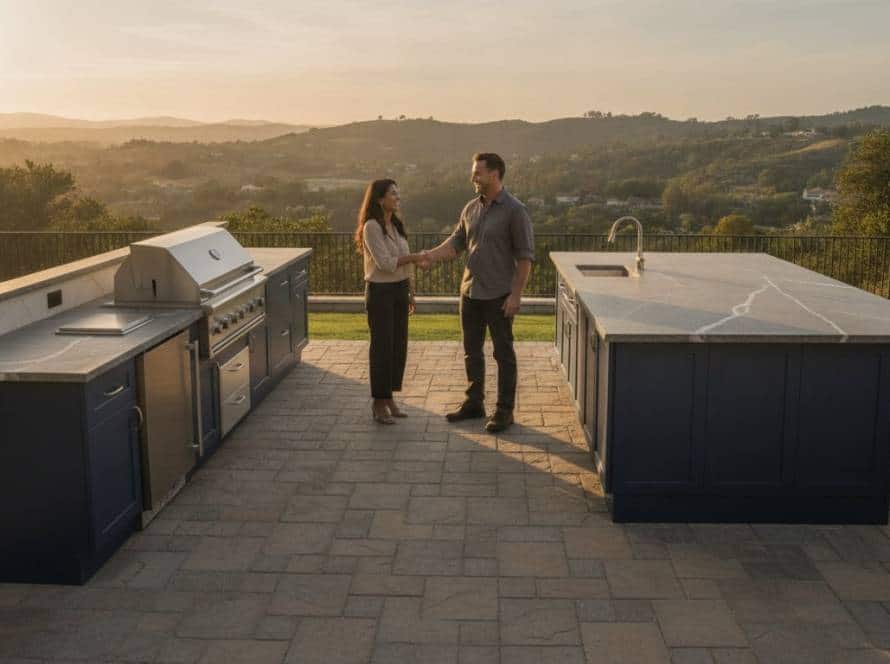
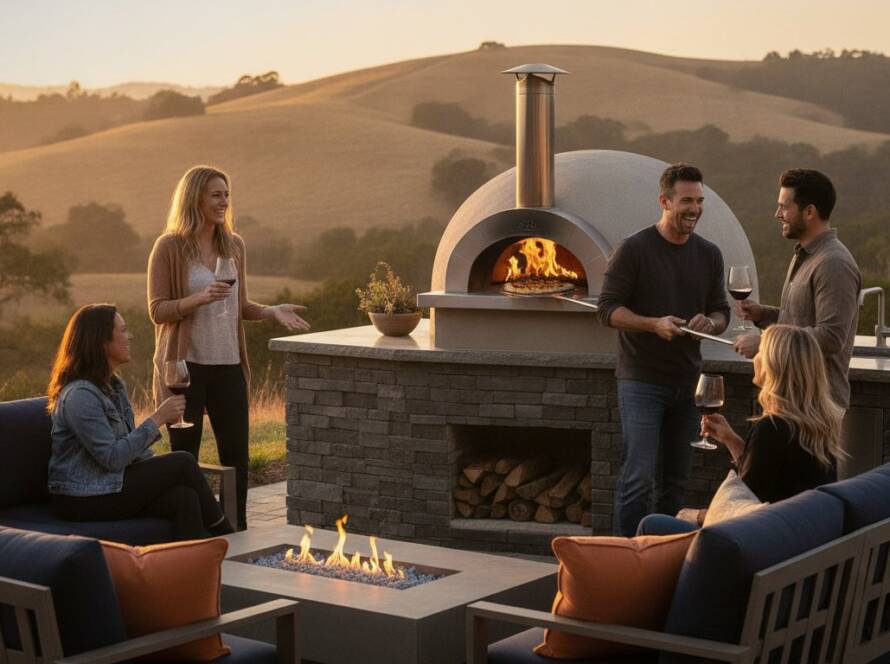
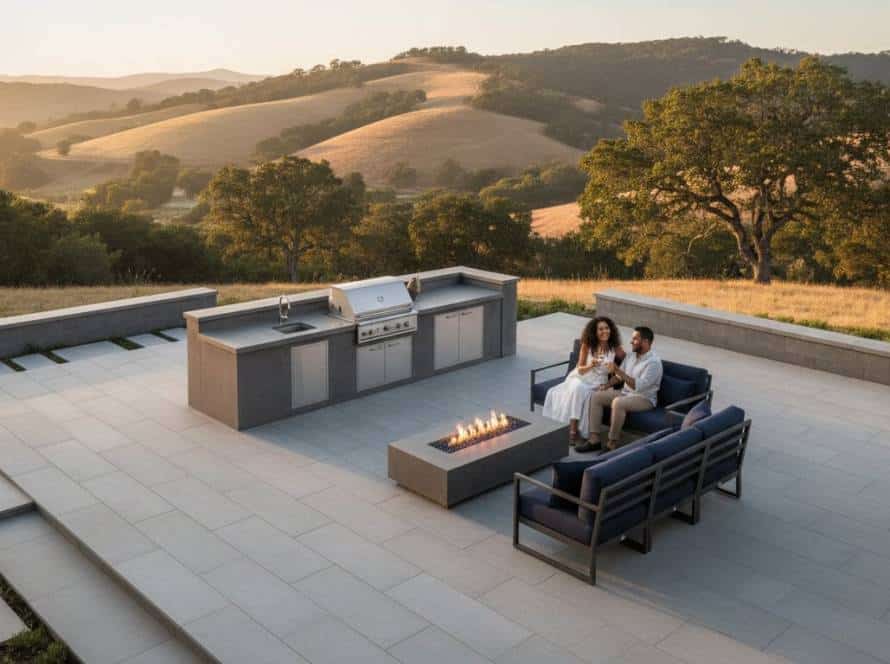
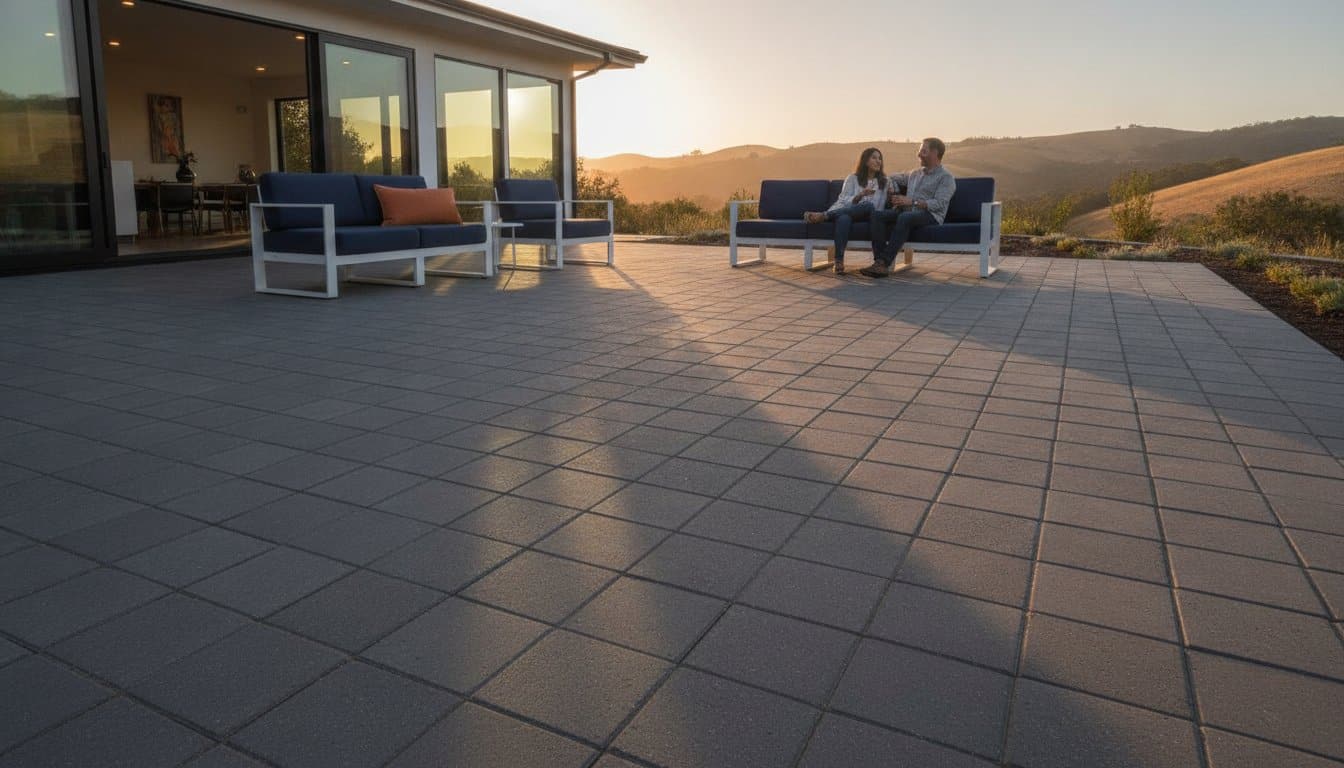
Modern-linear patterns are currently the dominant trend across Northern California. These oversized, rectangular pavers create a clean, minimalist look that complements the mid-century modern and contemporary architecture found in Orinda and Danville. This is a sharp departure from the small, tumbled cobblestones used in previous decades. To ensure a cohesive look, we recommend matching your paver palette to your home’s existing architectural features. Warm earth tones pair well with Mediterranean-style estates in Lafayette, while cool grays and charcoals anchor modern builds in San Ramon or Pleasant Hill. Many homeowners also choose to extend their hardscape investment by pairing a new paver patio with a fully integrated outdoor kitchen installation in San Francisco, creating a seamless outdoor living and entertaining space.
Porcelain Pavers: The Modern Choice for Pool Decks
Porcelain pavers have emerged as the premium standard for pool decks in Walnut Creek and Santa Rosa. They are essentially non-porous, which means they won’t absorb water, pool chemicals, or salt. This makes them exceptionally fade-resistant and easy to maintain over decades of use. Most importantly, they stay remarkably cool under the intense sun common in Clayton and Novato. Porcelain requires a specialized installation technique involving specific bedding or pedestal systems. This differs significantly from the standard sand-set method used for concrete, so professional expertise is mandatory to ensure a successful, level result.
Driveway Pavers: Durability Meets Curb Appeal
When planning a paver installation bay area driveway, thickness is your primary safeguard against structural failure. We recommend a minimum thickness of 80mm for all vehicular traffic areas. This thickness, combined with a precise interlocking mechanism, prevents individual stones from shifting or “creeping” under the weight of heavy SUVs. Choosing a multi-tonal color blend is a practical choice for high-use areas in busy neighborhoods like Rohnert Park or Martinez. These blends effectively hide tire marks and minor oil drips, maintaining your curb appeal between cleanings. You can explore our full range of porcelain and concrete paver options to find the perfect match for your home’s exterior.
The Bayside Way: A Streamlined 3-Step Installation
Executing a successful paver installation bay area project requires more than just skilled labor; it demands a repeatable, disciplined system. We’ve eliminated the typical chaos of home improvement by refining our workflow into three distinct, manageable phases. Our process is designed to move from the initial design to a completed, high-end hardscape within a three-week window for most residential properties. You won’t have to wonder about the status of your build or the location of your materials. We assign a Dedicated Project Manager to every site to handle all logistics, crew coordination, and quality control from start to finish. This ensures your project stays on schedule and meets our rigorous standards for structural integrity.
Step 1: Free Design Consultation and Fixed Pricing
Precision begins during the first meeting. We don’t provide vague estimates that fluctuate as the project progresses. Our team conducts thorough site measurements and discusses your specific vision to create a detailed, technical plan. This stage allows us to identify any potential soil or drainage issues before they become expensive problems. We then provide a transparent, all-inclusive project fee that covers everything from permitting to final cleanup. You’ll know exactly what you’re paying before the first shovel hits the ground. Schedule your free Bay Area design consultation today to lock in your fixed-price quote.
Step 2: The Managed Build Phase
Construction shouldn’t be a source of stress for you or your neighbors. During the build phase, your Project Manager provides daily updates so you’re always informed of our progress. We maintain a strict “clean site” policy, ensuring that equipment and materials are organized and that disruption to your neighborhood is minimized. Our crews are specialized hardscape professionals who focus exclusively on stone and paver systems; they aren’t general landscapers. This specialization ensures that every layer of your base and every joint of your pavers is installed with meticulous attention to detail and long-term stability.
Step 3: Final Walkthrough and Warranty Activation
We don’t consider a project finished until it passes our comprehensive 25-point inspection. During the final walkthrough, we examine every edge, joint, and slope to ensure it meets our engineering requirements. Once you’re completely satisfied, we activate your 25-year warranty. This isn’t a vague promise of “satisfaction,” but a structural guarantee that protects your investment against shifting or failure for two and a half decades. You can view the full details of our coverage on the Bayside Pavers Warranty page. We take full ownership of our work, providing you with total peace of mind and a beautiful, level outdoor space that lasts.
Secure Your Investment with Precision Engineering
Achieving a high-end outdoor space requires more than just picking a stone; it demands a rigorous approach to engineering and project management. You now understand how to navigate the complexities of Bay Area clay soil and why a fixed-price contract is essential for your peace of mind. By prioritizing proper sub-base compaction and selecting materials like porcelain or 80mm concrete pavers, you ensure your hardscape remains level and beautiful for decades. We don’t believe in the uncertainty of “estimates” that change once work begins.
Our team takes the guesswork out of the process. Every paver installation bay area project we lead includes a dedicated project manager to coordinate all logistics and a 25-year structural warranty to protect your investment. Most residential transformations are completed within a three-week window, ensuring you get back to enjoying your home quickly. Ready to eliminate the anxiety of inconsistent quotes and hidden costs? Get Your Free All-Inclusive Paver Quote and start your project with a partner that values precision and accountability. Your ideal outdoor living space is within reach.
Frequently Asked Questions
How much does paver installation cost per square foot in the Bay Area?
Professional installation costs depend on site complexity, material selection, and specific engineering requirements for your property. Factors such as excavation depth and the need for specialized base materials to manage clay soil will influence the total investment. For a detailed breakdown of what drives project totals in our region, see our complete analysis of how much does paver installation cost in 2026. We provide fixed-price quotes after a site consultation to ensure financial transparency and eliminate the “quote creep” common with vague estimates.
Do I need a permit for a paver driveway in Concord or Walnut Creek?
Yes, most Bay Area municipalities require a permit for driveway expansions, significant grading changes, or projects that alter a lot’s “impervious surface” ratio. Regulations in cities like Concord and Walnut Creek are strict regarding stormwater runoff management. We handle the entire permitting process as part of our comprehensive project management to ensure your installation complies with all local building codes.
How long does a typical paver patio installation take?
Most residential projects are completed within a three-week window once excavation begins. This timeline covers the entire lifecycle of the build, including site preparation, mechanical base compaction, stone laying, and the final 25-point inspection. Larger projects involving outdoor kitchens or retaining walls may require a longer schedule, which your dedicated project manager will outline before work starts.
Can pavers be installed over an existing concrete driveway?
We do not recommend installing pavers directly over an existing concrete slab. Old concrete prevents proper drainage and will eventually crack, causing the pavers above to shift and settle unevenly. To ensure a lifetime of durability, we excavate the existing concrete and build a flexible, multi-layered structural base from the ground up, protecting your investment from subterranean movement.
Are pavers better than stamped concrete for California homes?
Pavers are a superior choice because they form a flexible system that resists cracking during seismic activity or soil expansion. Stamped concrete is a rigid slab that inevitably cracks as the ground moves; these cracks are permanent and difficult to patch. A professional paver installation bay area project allows for easy individual stone replacement and provides much better long-term structural integrity.
How do I maintain my pavers to ensure they last 25 years?
Maintaining your pavers requires simple, regular care such as sweeping and occasional rinsing to prevent debris from settling in the joints. We suggest reapplying joint sand every few years and using a high-quality sealer to protect against UV fading and stains. These steps, combined with our rigorous 95% compaction standard, ensure your hardscape remains level and vibrant for the duration of its 25-year warranty.
What is the best type of paver for a pool deck in a hot climate like Napa?
Porcelain pavers are the ideal choice for Napa pool decks because they have exceptionally low heat retention. They stay significantly cooler under the California sun than darker natural stones or standard concrete. Porcelain is also non-porous and slip-resistant, making it a safe, fade-resistant surface that handles intense heat and pool chemicals without degrading or becoming uncomfortable for bare feet.
Can Bayside Pavers help with drainage issues during installation?
Yes, we integrate professional drainage solutions into the design phase of every paver installation bay area project. We manage sloped yards by calculating the precise pitch needed to direct water away from your home’s foundation. Our crews install catch basins, French drains, and permeable systems where necessary to prevent pooling and soil erosion, ensuring your new hardscape and your home remain protected. If you’re also considering expanding your outdoor living space, our guide to outdoor kitchen installation in San Francisco covers how to navigate permits, seismic requirements, and contractor coordination for a complete backyard transformation.

Article by
Adriana Esposito
Adriana Esposito is the owner of Bayside Pavers, a woman-owned outdoor living company serving the San Francisco Bay Area. With over 16 years of experience, she specializes in designing and building custom paver patios, driveways, outdoor kitchens, retaining walls, artificial turf, and other outdoor living spaces. Through this blog, she shares expert tips, design inspiration, and practical advice to help homeowners create beautiful, lasting outdoor spaces.