THE ATTRIBUTES OF PERMEABLE INTERLOCKING CONCRETE PAVERS
The past 100 years have seen tremendous growth in our collective infrastructure, including the extensive development of roads, parking structures, businesses and residences, and the impervious surfaces that go along with them. All of these paved surfaces have created significant environmental impacts like stream bank erosion, polluted lakes, streams, river, and estuaries, increased severity of flooding, and more.
Today, as we’ve become more aware and as municipalities have mandated, on-site stormwater management products like permeable interlocking concrete pavers have become a way to meet mandates while protecting the environment from further damage.
A SHORT HISTORY OF PERMEABLE INTERLOCKING CONCRETE PAVERS (PICP)
Since the 1980s, PICP has been used in Germany and throughout Europe, and in North America extensively since around 1992. Pervious concrete pavement was first used in Florida in the early 1970s, and porous asphalt emerged at around the same time as we became consciously aware of environmental degradation and began taking steps. Since that time, permeable systems have been used in a variety of climates and soils.
Over the past 20 years, extensive research has been performed throughout North America and overseas. Studies have shown that PICP has resulted in significant runoff reductions as well as reductions in suspended solids, oils, and metals.
THE ADVANTAGES OF USING PERMEABLE INTERLOCKING CONCRETE PAVERS
PICPs are constructed by mixing small-sized aggregate bound with cement to create a high strength porous matrix capable of supporting vehicular traffic. Pavers are installed, surrounded by small, highly pervious joints that are typically filled with stone that receive stormwater and filter out pollutants as it passes through. These stone-filled joints also contribute to the interlocking of the pavers and spread the load throughout the structure, adding to the strength of the surface.
Learn About Our Paver Installation Services
Depending on the design and pattern, PICP joints can vary anywhere between ¼ and ½- inch. While PICP has a less visible permeable surface area that pervious concrete slab, the opening in PICP joints along with the surface area of the pavers still provide high surface infiltration rates.
Pervious concrete surfaces are prepared and formed on the job site. This means that they are subject to delays and costs associated with weather. PICP units are manufactured in a factory and delivered to the site. This means that unlike pervious concrete, they can be installed in below-freezing temperatures, and are not subject to delays or restrictions due to weather.
PICPs are also manufactured to comply with national product standards, which require high compressive strength -averaging 8000 pounds psi and are also subject to freeze-thaw durability testing.
Some of the additional benefits of Permeable Interlocking Concrete Pavers include:
• AVAILABLE IN A WIDE SELECTION OF PRODUCTS
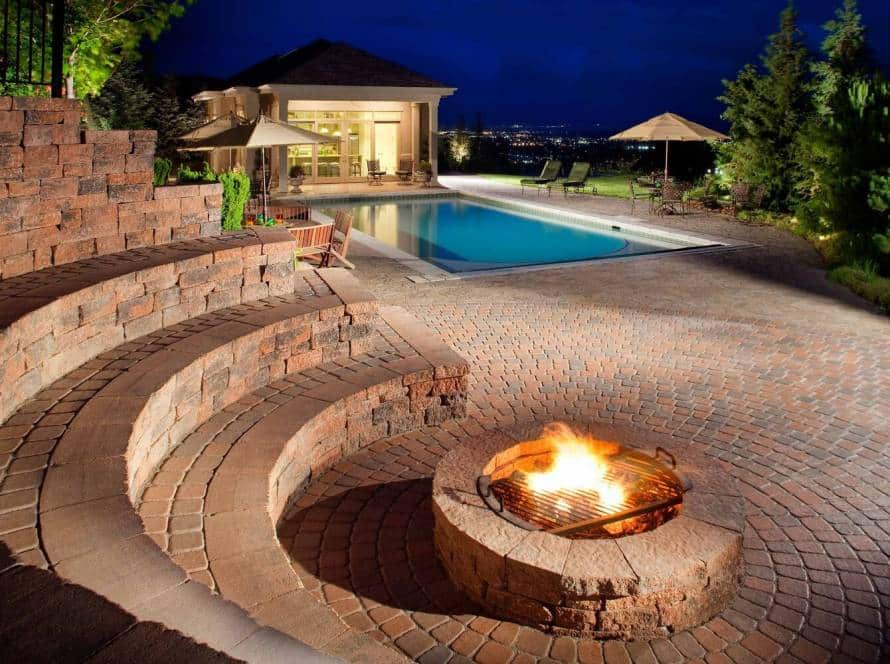
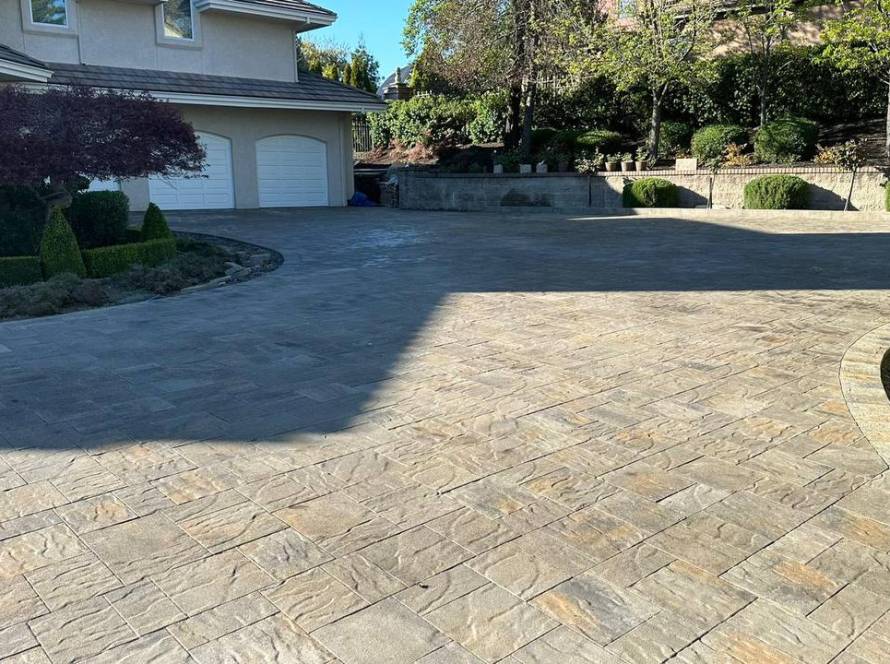
PICPs come in a wide range of shapes, textures, and colors and are designed to fit within any surrounding architecture and landscaping elements.
• CONSISTENT QUALITY
Manufactured units are consistent in quality, require no formwork, and can be mechanically installed in freezing temperatures. They also need no curing time and are immediately ready for traffic upon completion.
• THEY ARE AFFORDABLE AND ECONOMICAL
They are priced competitively with pervious concrete, and their lifecycle costs are significantly lower than concrete or asphalt in some markets.
• REPAIRS ARE EXTREMELY EASY
Unlike concrete or asphalt, which, when damaged, can be costly to repair, and aesthetically unpleasant, damaged PICPs can be removed and reinstalled. They can also be partially removed to install service utility lines, there are never any ugly patches, and the repaired surface perfectly matches the surrounding materials.
• PICP ARE DURABLE AND EASY TO MAINTAIN
High freeze-thaw, deicing, and salt resistant, water in the base will not freeze and heave. When frozen, even complete saturation will not damage pavers. Snow and ice immediately drain upon melting, reducing ice hazards, and they can be plowed with no damage. Maintenance is easy. Simply vacuum or sweep regularly to remove sediment and debris. Aggregate can be easily removed and replenished if it becomes deeply clogged.
• ENVIRONMENTALLY FRIENDLIER THAN ALTERNATIVE MATERIALS
Manufactured pavers can incorporate cement substitutes like fly ash, slag, silica fume, etc. and still maintain porosity. Pavers can also be crushed and recycled at the end of their useful life.
PICP’S FOR HOMEOWNERS AND COMMERCIAL HARDSCAPE PROJECTS
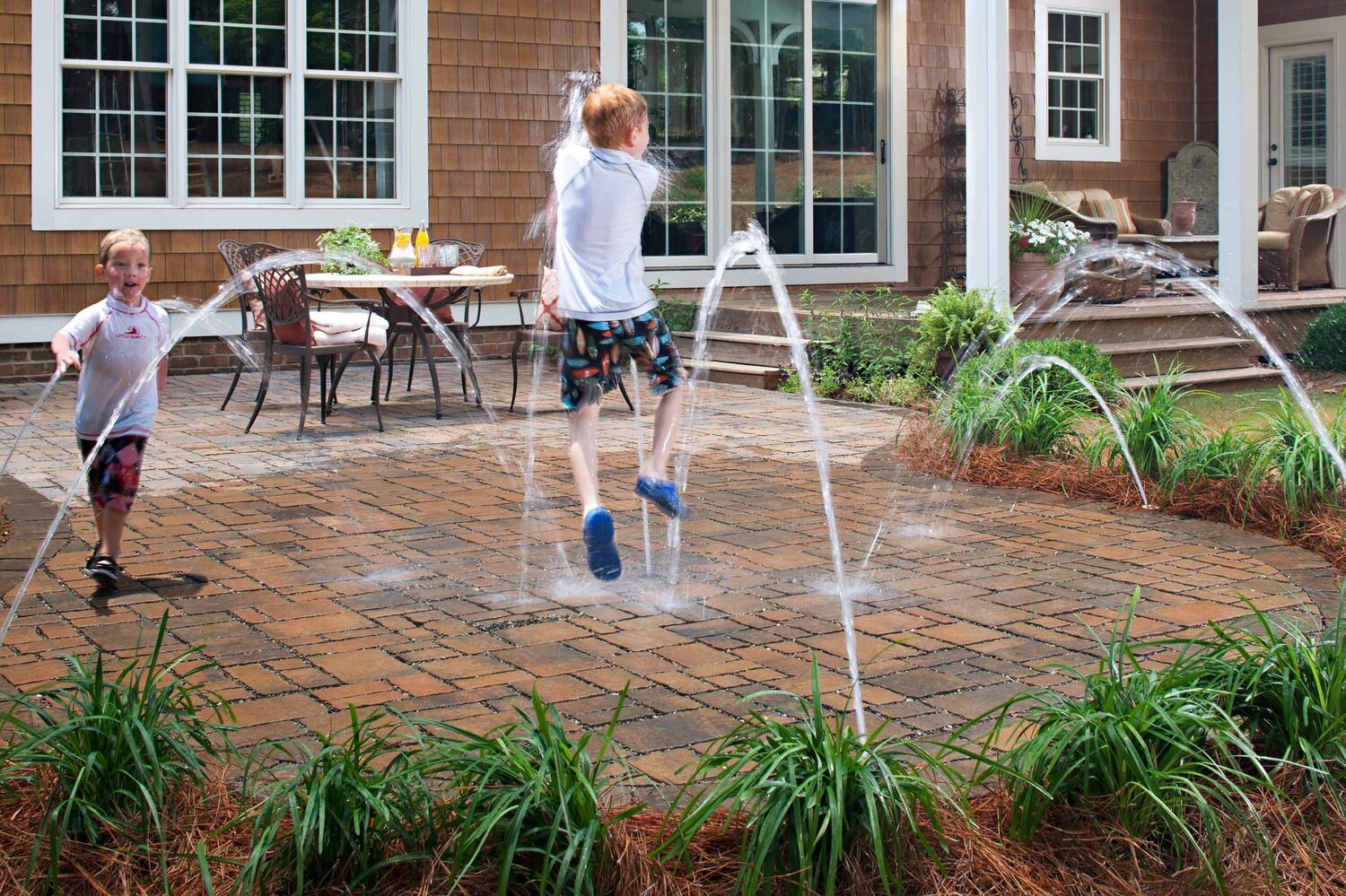
Permeable interlocking concrete pavers offer residential building owners and homeowners an environmentally, affordable, durable, and beautiful alternative to materials like poured concrete or asphalt. Whether it’s a driveway, walkway, parking lot, or patio, permeable interlocking concrete pavers offer excellent value and superior service.
If your planning a hardscape project in the greater San Francisco Bay area and would like more information on permeable interlocking concrete pavers, give the experts at Bayside Pavers a call at (925) 291-9384. Let us show you the range of high-quality, affordable PICP products we offer!
If you live in the East or South Bay areas, stop by our Concord, CA location at 2455 Bates Ave., Ste K. For North Bay residents, our Santa Rosa location at 1619 4th Street, Ste 12, is ready to help!