Did you know that replacing a 1,000-square-foot natural lawn with synthetic turf can save you approximately 55,000 gallons of water every year? For homeowners across Walnut Creek and the North Bay, the struggle with drought-stricken grass and skyrocketing utility bills is a constant source of frustration. You’re likely tired of watching your yard turn brown in the California heat or dealing with muddy patches the moment winter rains arrive. Professional synthetic turf installation in the Bay Area isn’t just a gardening choice; it’s a strategic engineering project that eliminates the endless cycle of weeding and mowing.
This guide provides the technical roadmap you need to transform your landscape into a high-performance, evergreen space that survives the 2026 climate. We’ll show you how to achieve a lush lawn that requires zero water while significantly increasing your property value. You’ll learn about the latest IR-reflective polymers that stay cool under the sun and the specific drainage systems required for pet-friendly durability. We also break down the 2026 regulatory environment, including HOA rights and local rebate updates, so you can move forward with the peace of mind that comes from a professional, managed installation.
Key Takeaways
- Learn why the sub-base is the most critical component of a successful build and how to manage Bay Area clay soil to prevent sinking or drainage issues.
- Discover how to integrate high-end pavers with turf strips using modern checkerboard and ribbon design trends to create a custom, high-end aesthetic.
- Understand the 2026 standards for heat-mitigation technology and antimicrobial infills that keep your lawn safe for pets and family during peak summer months.
- Streamline your project with a professional synthetic turf installation in the Bay Area that guarantees a 3-week completion timeline and a 25-year warranty.
- Identify the specific project management steps required to ensure your landscape transformation is efficient, transparent, and built for long-term durability.
The Bay Area Landscaping Crisis: Why Synthetic Turf is the 2026 Standard
The Bay Area faces a fundamental shift in how we manage outdoor spaces. Persistent drought cycles and tightening municipal restrictions have made traditional sod lawns a liability rather than an asset. Homeowners in Walnut Creek deal with intense summer heat that scorches natural grass in days, while those in Petaluma struggle with moisture-heavy winters that create persistent mud pits. A professional synthetic turf installation in the Bay Area solves these geographical challenges by providing a consistent, durable surface that doesn’t rely on the local water table. It eliminates the anxiety of brown patches and the constant labor of maintenance.
The history of artificial turf shows a massive technological leap from the abrasive “plastic grass” of 2010 to the hyper-realistic fibers of 2026. Modern products use multi-toned blades and thatch layers that mimic the organic look of fescue or bluegrass. This isn’t just about aesthetics; it’s a shift toward lifestyle-focused living. You’re no longer a slave to your lawn. Instead, your yard becomes a functional extension of your home designed for relaxation and entertainment.
Water Conservation and Local Rebates
Managing high water bills is the primary driver for turf conversion in 2026. While the East Bay Municipal Utility District (EBMUD) has moved away from turf rebates, other districts like the Estero Municipal Improvement District still offer up to $4 per square foot for conversion. Eliminating irrigation systems provides a clear ROI by removing the ongoing costs of broken sprinkler heads, valve leaks, and monthly service fees. Drought-tolerant landscaping in 2026 refers to high-performance outdoor environments that maintain ecological function and aesthetic appeal without requiring supplemental irrigation from potable water sources.
The Environmental Impact of Modern Turf
Sustainability concerns have evolved alongside the technology. Modern turf systems utilize 100% recyclable materials, ensuring the product doesn’t end up in a landfill at the end of its lifespan. By removing the need for fertilizers and pesticides, you protect local watersheds from chemical runoff that eventually flows into the San Pablo Bay and surrounding tributaries. Permeable turf backings also play a critical role in managing storm drainage. These systems allow water to penetrate the sub-base at rates exceeding 400 inches per hour, preventing the runoff issues common with compacted soil or non-porous surfaces. This precision engineering ensures your landscape remains stable and dry even during the heaviest atmospheric river events.
Engineering the Perfect Lawn: The Installation Process
A successful synthetic turf installation in the Bay Area depends entirely on what lies beneath the surface. While the evergreen blades capture the attention, the turf itself represents only about 10% of the total engineering effort. The remaining 90% involves structural preparation designed to withstand the region’s specific soil conditions and weather patterns. Without a rigorous foundation, even the highest-quality turf will eventually buckle, wrinkle, or develop drainage pools. We treat every project as a civil engineering task to ensure your lawn remains perfectly level for decades.
Step 1: Sub-Base Preparation and Compaction
Bay Area properties often sit on heavy clay soil that expands when wet and contracts when dry. This movement is the primary cause of “sinking lawn” syndrome found in amateur installations. To prevent this, we excavate 3 to 4 inches of organic material to create space for a stable foundation. We then install Class II road base, which is the industry standard for durability and stability. This material is compacted to a 90% to 95% density using vibratory plate compactors. We also establish a precise 2% slope across the site; this ensures that during heavy winter storms, water moves toward designated drainage points rather than sitting beneath your lawn. Proper compaction and grading are the only ways to guarantee a surface that stays flat and functional.
Step 2: Turf Selection and Seaming
Selecting the right fiber shape is a functional decision, not just an aesthetic one. S-shaped fibers are designed to diffuse sunlight, which reduces heat absorption during hot Concord summers. W-shaped fibers provide superior resilience for high-traffic areas or family play zones in cities like Danville. Once the turf is laid, the art of invisible seaming begins. We use professional-grade seaming tape and industrial adhesives to bond sections together, ensuring the grain of the grass remains consistent across the entire yard. We then secure the perimeter with specialized edging or landscape spikes to prevent lifting. This meticulous attention to detail is what separates a professional build from a weekend DIY project.
The final layer of the project is the infill. You can choose silica sand for basic stability, cooling crystals to lower surface temperatures by up to 30 degrees, or antimicrobial infills to manage pet odors. If you want to ensure your project follows this rigorous standard, it helps to consult with a professional team that understands local soil mechanics. Every installation we manage includes a dedicated project manager to oversee these technical details, ensuring the build is completed within a 3-week timeline and backed by a 25-year warranty.
Turf and Pavers: Designing a High-End Bay Area Backyard
High-end Bay Area backyards in 2026 are moving away from monolithic designs. Homeowners now prioritize a sophisticated blend of hardscaping and soft textures to create a multi-dimensional environment. Integrating professional paver installation bay area with synthetic turf creates a balanced, modern aesthetic that maximizes both utility and style. The “Checkerboard” pattern, where large-format pavers are interspersed with turf squares, is a top choice for entryways and focal points. “Ribboning,” or using long strips of turf between stone slabs, adds a linear elegance that elongates smaller yards.
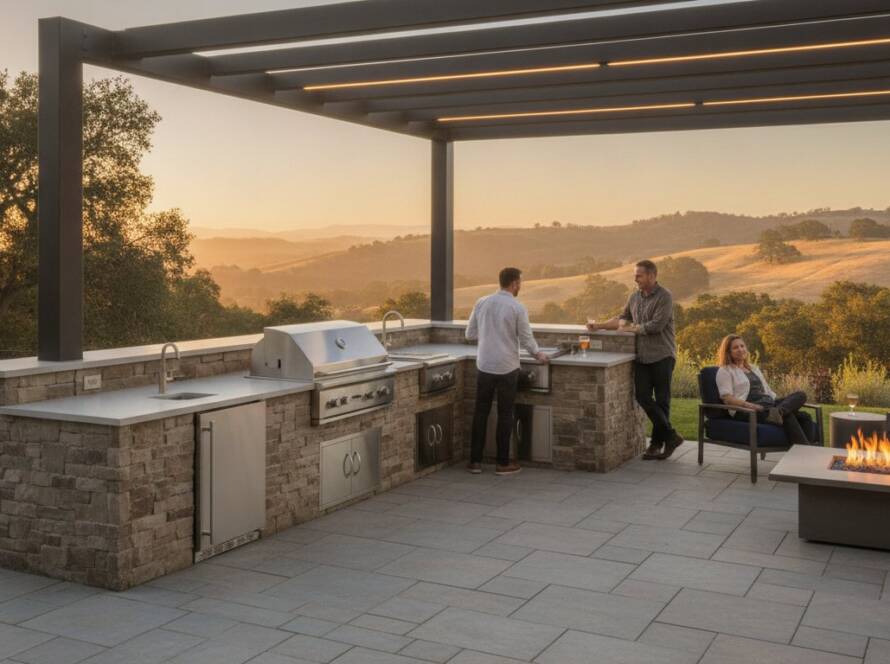
Zoning is critical for functional outdoor living. We recommend using a synthetic turf installation in the Bay Area for play areas or pet runs because of its impact absorption and high drainage. Conversely, outdoor kitchens and dining zones require the stability of pavers to support heavy furniture and high-heat equipment. Achieving a flush-mount transition is the hallmark of a professional build. The turf must sit exactly level with the stone to prevent tripping hazards and ensure a seamless visual flow across the entire landscape.
The Aesthetic Advantage of Mixed Textures
The visual contrast between smooth porcelain or textured concrete and the vibrant green of synthetic turf provides an immediate upgrade to curb appeal. In tight urban lots across San Francisco and Oakland, using turf as a “living” grout between stepping stones creates the illusion of a larger, more expansive garden. This technique provides the softness of a lawn without the maintenance requirements of traditional groundcover. It also reduces the “heat island” effect often caused by large, unbroken spans of dark stone, making your backyard more comfortable during peak summer afternoons.
Structural Integrity at the Borders
A common failure in mixed-material projects is base-material migration. This occurs when the gravel or sand from the paver base bleeds into the turf’s sub-base, causing uneven settling or unsightly gaps. We use rigid perimeter edging and professional-grade barriers to keep these zones distinct and stable. Drainage is equally important; when turf meets non-permeable surfaces like stone, the grading must be calculated to prevent water from pooling at the seam. A single project manager should oversee both the turf and paver installation to ensure that the sub-base elevations and drainage slopes are perfectly synchronized across the entire site.

Addressing Homeowner Concerns: Heat, Pets, and Longevity
Modern homeowners often approach turf with three primary anxieties: surface heat, pet hygiene, and long-term durability. These concerns are valid but entirely manageable through high-performance material selection and rigorous engineering. A professional synthetic turf installation bay area utilizes advanced material science to solve these issues at the source. We don’t just lay grass; we install a multi-layered system designed to withstand the specific stressors of Northern California living. This includes managing fiber resilience to prevent the matting and wrinkling often seen in lower-quality builds.
Pet ownership is at a record high in the Bay Area, making hygiene a top priority for 2026 landscapes. We address this with high-flow drainage backings that handle over 400 inches of water per hour. This ensures that pet waste is flushed through the system quickly, preventing the buildup of bacteria. When combined with antimicrobial infills, these systems neutralize odors before they become a nuisance. This level of performance is only possible when the sub-base and turf backing are perfectly synchronized to move moisture away from the surface.
Keeping Turf Cool in the East Bay Sun
Surface heat is a critical factor for properties in the East Bay and South Bay where triple-digit temperatures are common. Traditional synthetic fibers can become uncomfortable under direct solar load. To counter this, we utilize IR-reflective polymers that reflect infrared light rather than absorbing it. When paired with hydro-chilled infills for evaporative cooling, these systems can stay up to 30 degrees cooler than standard turf products. We also recommend strategic hardscaping and the preservation of existing trees to provide natural shade, creating a comfortable microclimate for your family and pets throughout the summer.
The 25-Year Warranty: What It Actually Covers
A long-term investment requires a guarantee that protects your financial commitment. There is a critical difference between a manufacturer’s fiber warranty and a comprehensive installation warranty. While many manufacturers cover UV degradation, they rarely account for the structural integrity of the project. Our 25-year warranty covers the entire installation, including the stability of the sub-base and the precision of the seams. This commitment is the gold standard for Bay Area hardscaping. It ensures that your lawn remains a high-value asset for decades. To secure this level of protection for your property, request a free design consultation with our project management team today.
Choosing Your Bay Area Partner: The Bayside Pavers System
Selecting a contractor for a large-scale landscape transformation often feels like a gamble. Many homeowners worry about hidden costs, missed deadlines, and poor communication. We’ve eliminated these anxieties by developing a controlled, repeatable system for success. A professional synthetic turf installation in the Bay Area shouldn’t be a source of stress. It should be a streamlined, managed project that respects your financial commitment and your time. Our team takes full ownership of the entire lifecycle of your build, providing you with the peace of mind that comes from working with seasoned experts.
Our 3-step process is designed for clarity and impact. It begins with a free design consultation to align on your vision. We then provide all-inclusive pricing that covers every technical detail, from excavation to final infill. Finally, we move into the execution phase, where our disciplined project managers ensure every milestone is met with precision. This structured approach is why we’re able to maintain a consistent 3-week project completion timeline while delivering a result that’s backed by a 25-year warranty.
Transparency in Pricing and Planning
We understand that “contractor creep” is a major frustration in the home improvement industry. Our all-inclusive model is built to counter this by providing a definitive price before the first shovel hits the ground. During your free design consultation, we analyze your property’s specific needs, including soil type and drainage requirements. We don’t believe in sales-driven fluff; we provide a practical, no-nonsense assessment of what’s required for a durable installation. By the time we start, you’ll have a clear understanding of the logistics and the timeline. We manage every aspect of the site, ensuring our crews work efficiently to minimize the impact on your daily routine.
Local Expertise You Can Trust
Local knowledge is vital when dealing with the diverse microclimates of Northern California. We have a long history of high-end hardscaping across the North and East Bay, serving communities in Concord, Walnut Creek, and Pleasanton. We understand the specific building codes and drainage challenges unique to these areas. This expertise ensures that your synthetic turf installation in the Bay Area is engineered to handle everything from intense heat waves to atmospheric rivers. We don’t just act as service providers; we’re rigorous project coordinators who take pride in protecting your investment. Your outdoor space deserves a partner that values craftsmanship as much as you do. Schedule your free design consultation with Bayside Pavers today to start your landscape transformation.
Secure Your 2026 Landscape Transformation
Transitioning to a high-performance landscape is a strategic decision that protects your property value and your time. Success depends on rigorous sub-base engineering and the integration of advanced heat-mitigation technology. You don’t have to settle for a yard that’s a constant drain on your resources; instead, you can opt for a predictable, high-end result. A professional synthetic turf installation bay area provides an evergreen, water-efficient solution that thrives despite California’s climate challenges.
At Bayside Pavers, we provide a dedicated project manager for every build to ensure your vision is executed with precision. We back our workmanship with a 25-year warranty on all installations, giving you long-term security for your outdoor investment. Most projects reach completion within just 3 weeks, allowing you to enjoy your new space without the frustration of an endless construction timeline. Your ideal backyard is closer than you think.
Start your 3-week backyard transformation with Bayside Pavers
Frequently Asked Questions
Is synthetic turf safe for dogs and pets in the Bay Area?
Yes, modern turf is specifically engineered for pet safety and hygiene. We prioritize high-flow drainage backings that handle over 400 inches of water per hour to prevent bacteria buildup from pet waste. In warmer areas like Walnut Creek or Concord, we also utilize antimicrobial infills to neutralize odors. These systems provide a durable, mud-free surface for dogs while remaining soft underfoot. Every build is overseen by a dedicated project manager to ensure the sub-base is optimized for pet use.
How much hotter does artificial grass get compared to natural grass?
Standard synthetic turf can reach higher temperatures than natural grass, but 2026 technology significantly closes this gap. We utilize IR-reflective polymers and hydro-chilled infills that can lower surface temperatures by up to 30 degrees. This is vital for properties in the East Bay where summer heat is intense. Strategic hardscaping and natural shade from trees also help maintain a comfortable microclimate for your family and pets throughout the season.
Does synthetic turf require any maintenance at all?
While it eliminates mowing and irrigation, synthetic turf is not entirely maintenance-free. You should occasionally brush the fibers with a power broom to prevent matting in high-traffic areas. Removing organic debris like leaves prevents weed growth in the thatch layer. For pet owners in San Ramon or Danville, a periodic rinse with water helps maintain hygiene. These simple tasks are far less demanding than the constant upkeep required for traditional sod lawns.
Will artificial grass increase the property value of my Bay Area home?
A high-quality synthetic turf installation in the Bay Area often increases property value by enhancing curb appeal and lowering utility expenses. Prospective buyers value the drought-conscious luxury of a lush, evergreen lawn that doesn’t require irrigation. When integrated with professional hardscaping, the landscape becomes a low-maintenance asset. Replacing a 1,000-square-foot lawn can save approximately 55,000 gallons of water annually, which is a major selling point in California’s real estate market.
How long does a professional synthetic turf installation take?
Most professional installations by Bayside Pavers are completed within a 3-week timeline. This duration includes the full engineering cycle: excavation of organic material, installation and compaction of the Class II road base, and the precision fitting of the turf fibers. Our dedicated project managers coordinate every phase to ensure efficiency and transparency. This disciplined approach eliminates the typical delays associated with unmanaged crews, allowing you to enjoy your new backyard without a prolonged construction period.
Can synthetic turf be installed over existing concrete or old grass?
Professional standards require the complete removal of old grass and organic soil before installation. We excavate 3 to 4 inches to create a stable foundation with Class II road base. While turf can be installed over concrete, it requires a specialized foam pad and specific drainage channels to prevent water from pooling. Simply laying turf over existing surfaces without proper sub-base preparation leads to sinking and poor drainage, which compromises the 25-year warranty we provide.
What happens to the rain? Does artificial turf drain well during Bay Area winters?
Professionally installed turf drains significantly faster than natural soil, which is essential during heavy Bay Area winters. Our systems utilize permeable backings that allow water to pass through at rates exceeding 400 inches per hour. We also establish a 2% slope to direct runoff toward designated drainage points. This prevents the muddy patches and standing water common in cities like Pleasanton or Livermore, ensuring your yard remains functional and dry even after atmospheric river events.
How do I choose the right ‘pile height’ for my backyard?
Pile height selection depends on your primary use for the space. For high-traffic areas or pet runs, a shorter pile height of 1.25 to 1.5 inches is more resilient and easier to clean. If you prioritize a lush, ornamental look for a front yard in Orinda or Lafayette, a height of 1.75 inches or more provides a softer aesthetic. We match these heights with specific fiber shapes, like W-shaped blades, to ensure the grass remains upright and realistic over time.
Article by
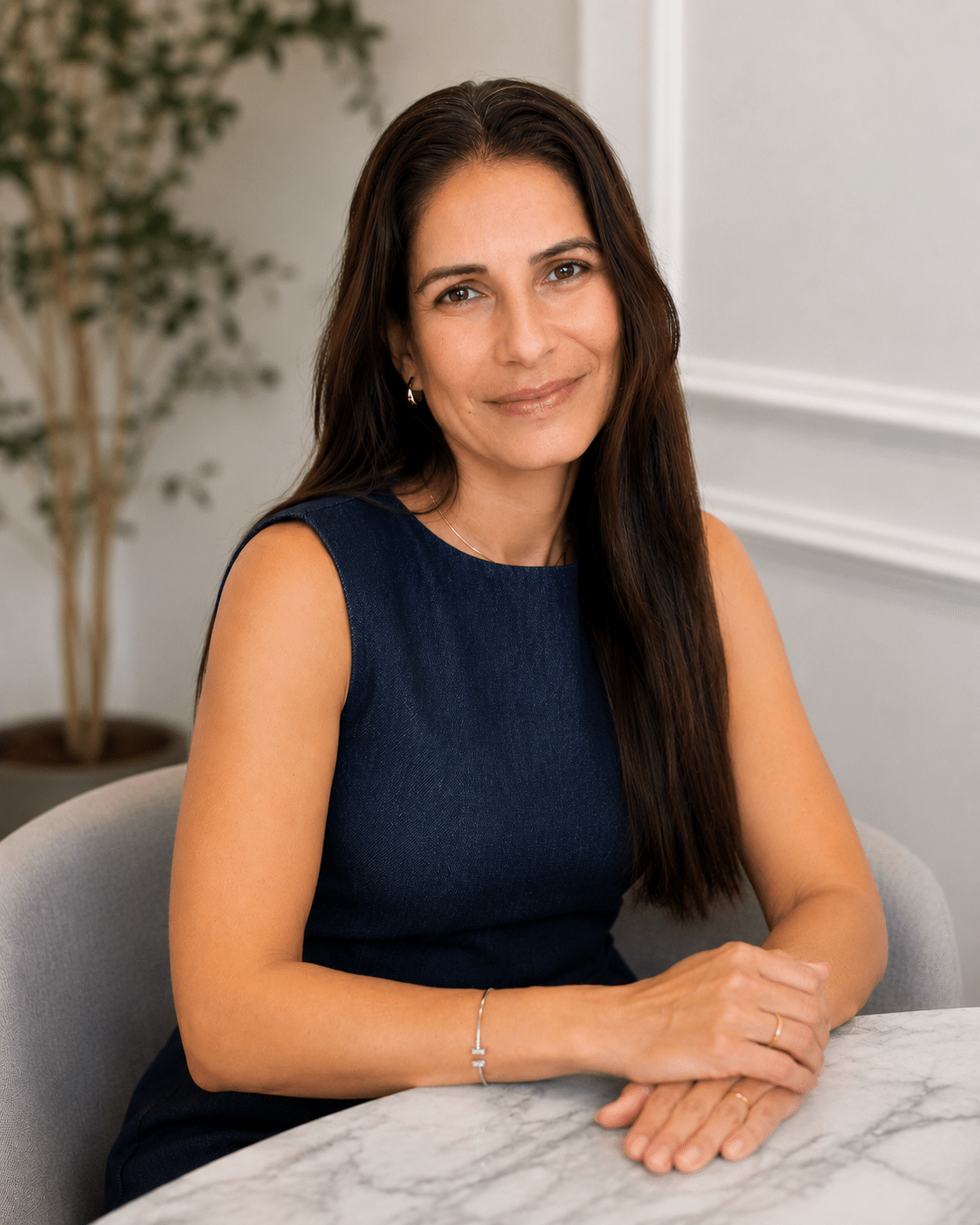
Adriana Esposito
Adriana Esposito is the owner of Bayside Pavers, a woman-owned outdoor living company serving the San Francisco Bay Area. With over 16 years of experience, she specializes in designing and building custom paver patios, driveways, outdoor kitchens, retaining walls, artificial turf, and other outdoor living spaces. Through this blog, she shares expert tips, design inspiration, and practical advice to help homeowners create beautiful, lasting outdoor spaces.