What if the heavy winter rains that usually flood your driveway became your property’s greatest asset instead of a drainage nightmare? You’ve likely dealt with standing water during a January downpour or worried about how the region’s notorious clay soil might shift your hardscape over time. It’s frustrating to watch water pool against your foundation while trying to keep up with strict municipal runoff regulations. Integrating permeable pavers bay area residents can rely on ensures that every drop of rain is managed on-site, protecting your home and the environment simultaneously.
You want a beautiful, functional driveway that eliminates puddles and complies with the latest 2026 stormwater ordinances without sacrificing style. This guide provides everything you need to master the technical benefits and design possibilities of these advanced systems. We will examine the latest “Hydro-Hardscape” trends under the updated Model Water Efficient Landscape Ordinance, explain the engineering required for a stable 25-year solution, and preview the specific local requirements for cities like San Francisco and Palo Alto.
Key Takeaways
- Understand the multi-layer engineering that transforms a standard driveway into a high-performance water-management system.
- Identify how to comply with 2026 local stormwater ordinances and leverage regional landscape conversion rebates.
- Master the design possibilities for permeable pavers bay area projects, from modern large-format textures to integrated synthetic turf zones.
- Discover how to blend high-end aesthetics with a disciplined 3-week installation timeline and a protective 25-year warranty.
What Are Permeable Pavers and Why Does the Bay Area Need Them?
Permeable pavers aren’t just decorative stones. They’re a sophisticated engineering solution designed to manage water at the source. Permeable paving systems consist of interlocking units with oversized joints filled with specialized aggregates. Unlike traditional surfaces that shed water into the street, this system allows rain to pass through the surface and into a multi-layered stone reservoir below. This “system” approach is critical. It’s the layers beneath the pavers that provide the structural integrity and storage capacity needed for a 25-year hardscape solution.
In the Bay Area, we face unique challenges. Our winters often bring intense atmospheric rivers that overwhelm standard drainage systems. Traditional driveways turn into rivers, sending pollutants directly into the San Francisco Bay. By installing permeable pavers bay area homeowners can achieve significant “Runoff Reduction.” This means water stays on your property, soaking into the earth rather than flooding your garage or the local sewer system. It’s a proactive way to treat rain as a resource rather than a waste product.
The Environmental Impact on the San Francisco Bay
Stormwater is the largest pathway for microplastic pollution into the Bay. Trillions of particles, mostly from car tires, enter the water through storm drains every year. Permeable systems act as a natural filter, trapping these contaminants in the stone layers before they reach the ecosystem. In urban centers like Concord and Walnut Creek, these pavers also combat the “Heat Island” effect. They don’t absorb and radiate heat like dark asphalt, which keeps your outdoor living space significantly cooler. Most importantly, they replenish local groundwater tables through natural infiltration, a vital benefit in our drought-prone climate.
Meeting Bay Area Stormwater Ordinances
Local regulations are becoming increasingly strict. As of July 1, 2026, the San Francisco Public Utilities Commission enforces a Stormwater Management Ordinance (SMO) that applies to projects creating as little as 2,500 square feet of impervious surface in separate sewer areas. Meeting these C.3 requirements is often simpler with permeable pavers than with complex underground detention tanks. In Marin and Napa, obtaining building permits frequently depends on meeting specific permeable surface ratios. These systems provide a direct path to compliance, satisfying municipal inspectors while delivering a high-end aesthetic for your home.
The Engineering Behind Permeable Paver Systems
A permeable driveway is a vertical filtration system, not just a flat surface. While standard pavers rely on a compacted sand base that blocks water, permeable pavers bay area installations utilize a multi-layered approach to handle heavy precipitation. This structure includes the surface unit, a bedding layer of fine stone, a base of larger aggregates, and a deep sub-base of coarse rock. Each layer serves a specific structural and hydraulic purpose, ensuring the entire assembly remains stable under the weight of vehicles while simultaneously managing water.
The secret lies in “open-graded” aggregates. Unlike traditional road base, these stones contain no “fines” or dust. This creates large void spaces between the rocks, allowing the system to function as a massive underground detention basin. This reservoir holds water until it can naturally soak into the soil below. In 2026, industry-standard infiltration rates for newly installed permeable systems typically exceed 100 inches per hour, ensuring rapid drainage even during extreme weather events. Understanding stormwater management with permeable pavers is essential for protecting your property from erosion and local flooding.
Solving the Bay Area Clay Soil Challenge
The East Bay is notorious for expansive clay soil that shifts as moisture levels change. Without proper engineering, a standard driveway will eventually crack or sink. We solve this by installing deeper sub-bases that provide a rigid foundation. We also integrate heavy-duty geo-textiles between the native soil and the stone layers. This fabric prevents the clean drainage stone from migrating into the clay, maintaining the system’s structural integrity for decades. If you’re planning a project, a free design consultation can help determine the exact base depth required for your specific soil type.
Joint Material: The Secret to Permeability
Traditional pavers use polymeric sand in the joints to lock stones together, but this material is essentially waterproof. Permeable systems use #8 or #9 crushed stone instead. These small, angular chips allow water to flow freely into the reservoir below. The joint size directly dictates the speed of absorption; wider joints handle higher volumes of water. Beyond performance, these aggregates offer a distinct aesthetic. You can choose stones that contrast with your pavers for a bold, modern look or select matching tones for a seamless, understated finish. This precision in material selection ensures your driveway remains both beautiful and functional during the rainy season.
Permeable vs. Traditional Pavers: A Strategic Comparison
Choosing between traditional and permeable pavers bay area homeowners often weigh the initial installation effort against decades of performance. Traditional pavers are installed on a bed of compacted sand and “fines,” which creates a solid, water-resistant barrier. Permeable systems require a more disciplined excavation process, involving deeper stone reservoirs and specialized aggregates. While the upfront complexity is higher, this investment replaces the need for costly auxiliary drainage systems like catch basins and French drains. You’re essentially building the drainage into the driveway itself, creating a one-and-done solution for your property.
Performance During Heavy Bay Area Rains
During a typical January storm, the difference between these two systems is stark. Traditional pavers shed water immediately, often leading to surface ponding and the erosion of joint sand. This runoff carries pollutants into the street and can eventually undermine the driveway’s edges. Permeable pavers offer immediate, 100% absorption. You won’t see puddles forming, as the water disappears through the joints the moment it hits the surface. This eliminates hydroplaning risks and keeps your property’s perimeter dry and stable even during intense atmospheric rivers.
Maintenance and Longevity Framework
A common concern is whether these systems eventually “clog” with debris. While sediment can accumulate over 10 to 15 years, the performance rarely drops below the capacity needed for local rainfall. Refreshing the system is straightforward; a simple vacuum method removes the top layer of joint stone and any trapped debris, followed by a quick refill of clean aggregate. This prevents the shifting often seen in traditional installs. If you’re currently dealing with a failing surface, understanding how to fix uneven paver driveways permanently illustrates why the stable, stone-based foundation of a permeable system is a superior long-term choice.
Safety is another critical factor that traditional surfaces can’t match. Because water doesn’t sit on the surface, permeable pavers are naturally more slip-resistant. In the North Bay, where morning frost is common, these systems significantly reduce the risk of black ice formation. Since the water drains through rather than pooling, there’s no liquid left to freeze on the surface. This creates a safer environment for your family and protects your home’s curb appeal from the “heaving” caused by trapped moisture in fluctuating temperatures. It’s a calculated, high-performance upgrade that prioritizes long-term stability over short-term savings.

Design Possibilities for Bay Area Outdoor Living
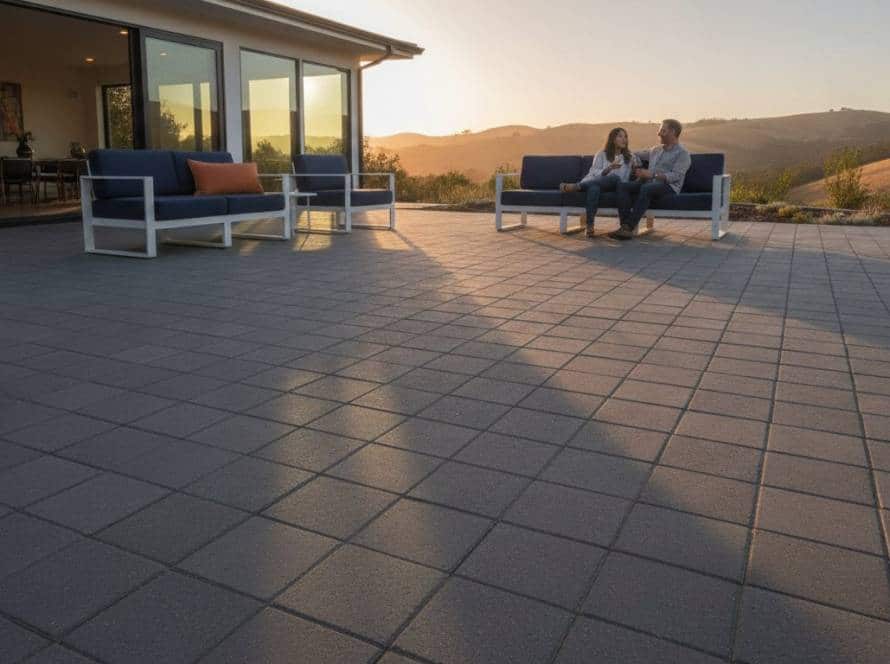
Modern engineering doesn’t mean sacrificing aesthetics. Today’s permeable pavers bay area residents select come in a vast array of textures and colors that rival any traditional stone. From sleek, large-format units that define contemporary landscapes to rustic cobble styles that evoke old-world European charm, the design flexibility is absolute. We often utilize color palettes that mirror the natural Northern California environment, such as warm Napa stone, deep Slate, and grounded Earth tones. This ensures your new hardscape complements your home’s architecture while performing vital environmental work.
One of the most effective ways to maximize utility is by integrating these systems with synthetic turf installation. This combination creates a “Hydro-Hardscape” that manages 100% of property runoff. If you have an existing concrete patio that suffers from drainage issues, we can install permeable borders. These functional accents act as perimeter drains, capturing sheet flow before it reaches your home’s foundation or landscape beds. This hybrid approach saves you from the cost of a full demolition while solving persistent standing water problems.
Permeable Driveways that Curb Appeal
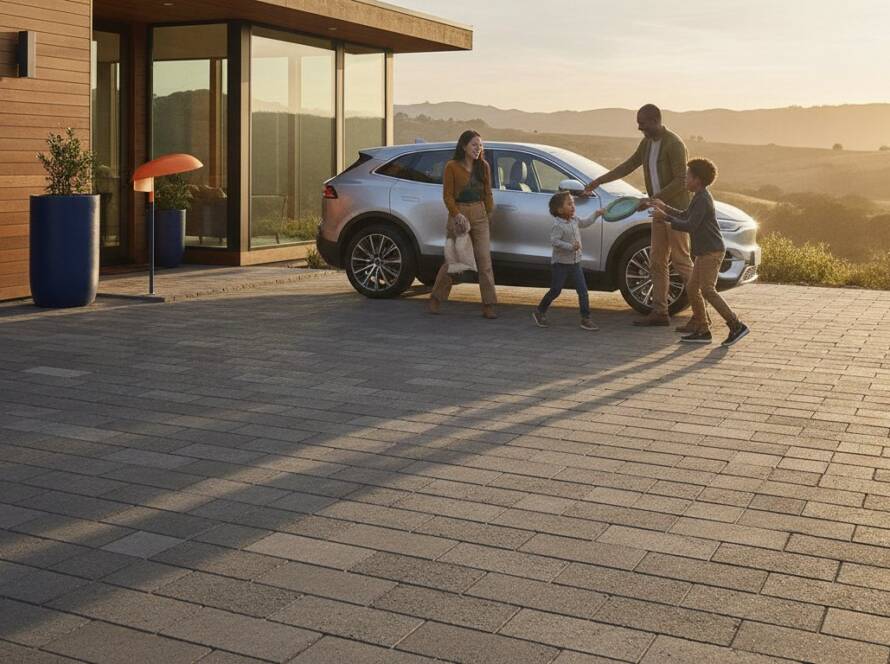
For high-traffic driveways, the pattern choice is as important as the stone itself. We recommend interlocking patterns like herringbone for heavy vehicles, as they provide superior weight distribution and prevent shifting. You don’t have to choose between permeable and standard pavers; many homeowners combine them. For instance, a Walnut Creek driveway transformation recently utilized standard pavers for the main body and a permeable “ribbon” or border to meet municipal runoff requirements. This provides a custom, multi-textured look that satisfies both the eye and the local building inspector.
Permeable Patios and Pool Decks
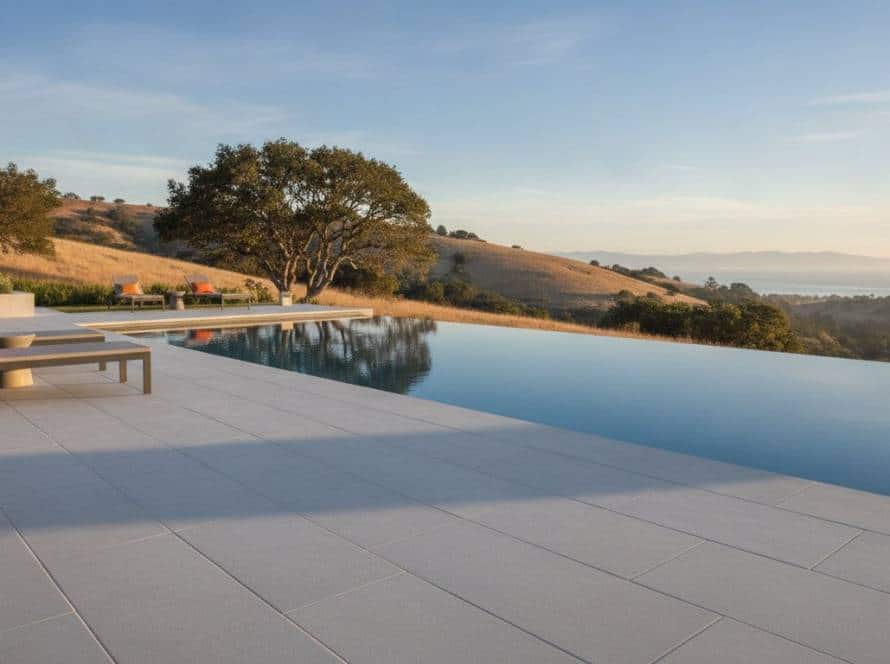
Choosing permeability is a strategic move for pool deck installation. Traditional pool decks often become slippery as water pools on the surface, creating safety hazards. Permeable systems eliminate this risk by absorbing splash-out immediately. For high-end patios, modern porcelain-look permeable options provide a sophisticated finish that is virtually indistinguishable from luxury tile. These materials are incredibly durable and resistant to fading, ensuring your outdoor living space remains a premium asset for decades. To see how permeable pavers bay area designs can fit your property, schedule a free design consultation with our project managers today.
Professional Permeable Paver Installation in the Bay Area
Installing permeable pavers bay area homes require demands a higher level of technical precision than standard hardscaping. It isn’t just about laying stones; it’s about calibrated excavation and specific stone graduation. We’ve refined this complexity into a disciplined 3-step system: Consultation, Design, and a 3-Week Build. This repeatable workflow eliminates the guesswork and delays often associated with custom construction, providing a predictable path to a high-performance driveway or patio.
Precision begins with professional laser-leveling. Because a permeable system relies on a perfectly pitched sub-base to manage water flow, even a minor calculation error can lead to subsurface pooling. Our crews use advanced leveling technology to ensure the stone reservoir performs exactly as engineered. To maintain this standard, every project is overseen by a dedicated project manager. They serve as your single point of contact, managing the logistics and technical specs so the build stays on schedule and meets our rigorous quality benchmarks.
Your Material Samples Delivered to Your Door
Choosing the right aesthetic shouldn’t be a guessing game. During your free design consultation, we bring material samples directly to your home. This allows you to see how different textures and colors look in the specific light of Danville or Orinda, ensuring the final result complements your home’s unique architecture. We provide upfront, all-inclusive pricing with a strict “no change orders” policy. You’ll know the total investment before we break ground, providing financial transparency and peace of mind from the start.
Start Your Project with Bayside Pavers
Our 3-week installation window is a commitment to your time. While other contractors might let a project linger for months, our organized crews focus on your build from start to finish. We handle everything from the initial site preparation to the final joint-stone sweep. This efficiency doesn’t come at the expense of quality; it’s the result of a highly managed system designed for busy professionals in San Ramon and Walnut Creek.
Your investment is protected by our 25-year warranty on installations. This is our guarantee that your driveway or patio will remain stable, functional, and beautiful for decades. It reflects our confidence in the engineering and craftsmanship we bring to every property. If you’re ready to eliminate drainage issues and upgrade your home’s exterior, Schedule your free estimate today. We will provide the expert guidance and technical execution needed to transform your vision into a long-term hardscape solution.
Secure Your Property with High-Performance Permeable Engineering
Investing in permeable pavers bay area homeowners can rely on is a strategic decision for property protection and environmental responsibility. You’ve seen how a properly engineered stone reservoir manages heavy atmospheric rains and why these systems provide the most efficient path to meeting strict local stormwater ordinances. By selecting advanced textures and colors, you can achieve a sophisticated aesthetic that complements the Northern California landscape while eliminating standing water for good.
Bayside Pavers provides a controlled, repeatable system for success. Every project is overseen by a dedicated project manager who ensures our 3-week completion guarantee is met with absolute precision. We take full ownership of the entire lifecycle, from technical laser-leveling to the final joint-stone application. Because we prioritize engineering quality, your investment is backed by our 25-year installation warranty. This is a one-and-done solution designed to provide total peace of mind for decades to come.
Book Your Free Permeable Paver Design Consultation today to start your home’s transformation. Let’s build a functional, beautiful hardscape that stands the test of time.
Frequently Asked Questions
Do permeable pavers require more maintenance than standard pavers?
Permeable systems don’t require significantly more maintenance but do require a different approach. While standard pavers need polymeric sand top-offs, permeable units use specialized crushed stone. Every few years, you should inspect the joints for debris. If drainage slows, a professional vacuum can remove the top layer of stone and replace it with clean aggregate. This prevents the “heaving” issues common in Walnut Creek and Lafayette during fluctuating temperatures.
Will permeable pavers clog with dirt or leaves over time?
Clogging is a common concern but rarely leads to system failure. While fine sediment and organic matter like leaves can accumulate in the joints, the infiltration rate is so high that the system remains functional for years. In areas like Orinda or Napa with heavy tree cover, we recommend regular sweeping. If a clog occurs after a decade of use, simply removing and replacing the top inch of joint stone restores full permeability.
Can I use permeable pavers for a high-traffic driveway?
Yes, permeable pavers are ideal for high-traffic driveways when installed with a stabilized sub-base. The interlocking units are designed to distribute the weight of heavy SUVs and delivery trucks across a deep stone reservoir. For homeowners in San Ramon or Danville, we recommend specific interlocking patterns like herringbone. These patterns provide the structural integrity needed to prevent shifting or rutting, ensuring a 25-year lifespan for your hardscape.
How much more do permeable pavers cost compared to concrete?
Permeable systems typically involve a higher initial investment than standard poured concrete. This is due to the extensive excavation and the multi-layered stone reservoir required for proper drainage. However, they eliminate the need for separate French drains or catch basins. When you factor in the 25-year warranty and the avoidance of costly drainage repairs, the long-term value for a permeable pavers bay area project often exceeds that of traditional materials.
Are there specific Bay Area regulations requiring permeable pavers?
Yes, several regional mandates encourage the use of permeable pavers bay area residents need for compliance. As of July 2026, the San Francisco Stormwater Management Ordinance applies to projects replacing as little as 2,500 square feet of surface. Additionally, California’s Model Water Efficient Landscape Ordinance (MWELO) updates promote “Hydro-Hardscape” systems to manage runoff. Many municipalities use these standards to determine building permit eligibility for new residential developments and major redevelopments.
Can permeable pavers be installed over existing concrete?
No, installing permeable units over an existing concrete slab is not recommended. Concrete is an impervious surface that blocks water from reaching the soil. To function correctly, the old surface must be removed so we can install a deep, open-graded stone reservoir. This allows water to infiltrate the ground naturally. Attempting to “overlay” would trap moisture between the layers, likely leading to structural failure and persistent drainage issues on your property.
How long does the installation process typically take?
Most projects follow a disciplined 3-week completion timeline. This includes the initial site preparation, deep excavation for the stone reservoir, and the final installation of the pavers and joint material. While weather conditions in Petaluma or Santa Rosa can occasionally impact the schedule, our dedicated project managers coordinate every phase to ensure efficiency. This methodical approach minimizes disruption to your daily routine while maintaining the high engineering standards required for a 25-year hardscape.
What happens to the water once it goes through the pavers?
Once water passes through the joints, it enters a stone reservoir beneath the surface. This area acts as an underground detention basin, holding the water until it can naturally soak into the native soil. This process filters out pollutants like microplastics and tire debris before they reach the San Francisco Bay. It’s a critical tool for replenishing local groundwater tables and reducing the burden on municipal sewer systems during heavy atmospheric river events.

Article by
Adriana Esposito
Adriana Esposito is the owner of Bayside Pavers, a woman-owned outdoor living company serving the San Francisco Bay Area. With over 16 years of experience, she specializes in designing and building custom paver patios, driveways, outdoor kitchens, retaining walls, artificial turf, and other outdoor living spaces. Through this blog, she shares expert tips, design inspiration, and practical advice to help homeowners create beautiful, lasting outdoor spaces.