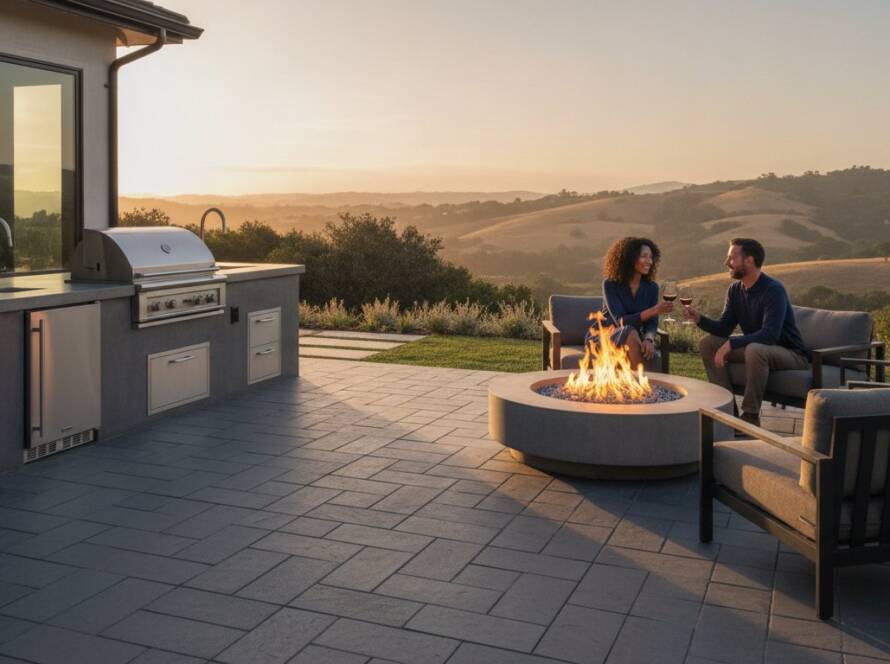
On a sloped lot, drainage and soil movement should shape the hardscape plan before you choose surface materials. A hardscape contractor in Rohnert Park should consider how water moves across the property, where changes in grade need support, and how patios, pavers, and retaining walls can work together without sending runoff toward another problem area.
It’s easy to focus first on how the finished space will look. But a patio or outdoor living area also needs a stable base and a clear water-management plan, especially on sloping ground. Addressing site conditions early helps you make practical design decisions and avoid features that don’t suit the property.
This guide explains how slopes, drainage, and erosion affect hardscape plans in Rohnert Park. Learn what to assess before choosing a layout, how retaining walls can create usable outdoor space, and what to consider for patios, pavers, and other features. You’ll also find the key planning factors to discuss before installation.
Key Takeaways
- Plan drainage and erosion control alongside the hardscape layout so water flow, slope changes, and usable outdoor space are considered together.
- Use retaining walls to manage grade changes and create more functional areas for patios and outdoor living.
- Compare contractor credentials and ratings: Diamond Certified reports an average of 4.3 out of 5 stars based on 1,296 reviews of 107 rated contractors serving Rohnert Park.
- Rohnert Park service listings include ZIP codes 94928, 94926, and 94927, helping you assess whether a contractor serves your neighborhood.
- Explore patio, paver, driveway, or pool-deck installation options that fit your property’s slope and drainage needs.
Retaining walls and outdoor living
A retaining wall can turn a sloped section of a Rohnert Park yard into usable outdoor space. It holds soil in place and creates a defined edge for a patio, path, or planting area. The wall’s position, height, materials, and drainage plan all affect how well it suits the site. Consider these elements together rather than treating the wall as a decorative border to add at the end.
Start by deciding what the grade change needs to accomplish. A wall beside a patio might create a level seating area, while one along a path can define the route and separate it from a planting bed. Several smaller terraces can divide a sloping yard into outdoor zones. The right arrangement depends on available space, access, existing structures, and water flow across the property.
Plan drainage from the start. Water that collects behind a wall can put pressure on the structure or carry soil toward lower areas. The design should show how water will move through or around the wall and where it will go next. For example, coordinate a patio and retaining wall so runoff doesn’t leave one problem area only to collect beside another.
How can I compare local hardscape contractor estimates and avoid common project risks? Compare the same items in each estimate: wall placement, site preparation, materials, drainage, cleanup, and work boundaries. Ask for a written scope that explains how the plan addresses the slope and connects with a nearby patio or path. Bayside Pavers provides an upfront, all-inclusive estimate for its projects.
- Scope: Confirm which areas the wall and related hardscape include.
- Site preparation: Review how excavation and soil handling fit the plan.
- Water management: Identify the intended drainage route and outlet.
- Completion: Clarify cleanup and the final review process.
Do hardscape projects in Rohnert Park require permits or inspections? There isn’t one permit answer for every project. Scope, site conditions, and applicable local requirements determine whether permits or inspections apply, so establish those requirements before construction begins.
What questions should I ask before hiring a hardscape contractor in Rohnert Park? Ask how the design responds to the slope, what drainage measures it includes, and how the wall connects to nearby features. Also clarify the work sequence, project responsibilities, and how changes are documented before work proceeds.
What warranties and maintenance do hardscape contractors offer? Warranty terms differ, so review the written coverage, duration, exclusions, and process for reporting a concern. Ask what routine care applies to the wall, pavers, and drainage components. Keeping drainage paths clear and addressing visible changes early can help protect the completed outdoor area.
When the plan includes a level gathering area, a retaining wall can support the layout, while an outdoor kitchen can make the space more functional. Coordinate the wall, cooking area, access route, and water flow on one site plan. This helps the finished outdoor living area work as a connected space rather than a set of separate additions.
Service areas in Sonoma and Marin counties
Start by defining the project location precisely. Rohnert Park addresses can be associated with different ZIP codes, and the service-area listings for local landscape contractors may distinguish between them. Diamond Certified lists contractors serving Rohnert Park ZIP codes 94928, 94926, and 94927. Use your property’s ZIP code when reviewing local coverage, then describe the site’s access, slope, and planned work clearly.
When planning a project around Rohnert Park, consider access and site conditions, not just the location. Properties in Sonoma County can differ in access and terrain from those elsewhere in Bayside Pavers’ service area. Project scope, material delivery, and work sequence also affect coordination. For example, a driveway project may need clear equipment access, while a patio installation may involve moving materials through a narrow side yard.
Before discussing an estimate, prepare a short project brief with the property location and work involved:
- Address and ZIP code: Identify the property in Rohnert Park or another Sonoma or Marin County community.
- Project area: Describe the driveway, patio, pool deck, or other hardscape planned.
- Site access: Note gates, narrow paths, stairs, or other access limits.
- Ground conditions: Explain visible slopes, water movement, or erosion concerns.
- Existing features: Identify walls, paving, structures, and planting areas near the work.
Those details make it easier to compare project scopes across locations. If one estimate includes preparation for a sloped section and another describes only surface installation, the difference matters. Ask each contractor to identify the work area and explain how site access, delivery, and ground conditions affect the proposed sequence. That gives you a clearer basis for comparing plans without assuming that a county-wide service label covers every property equally.
For a project in Rohnert Park, match the estimate to the actual address and ZIP code before reviewing the design. Then confirm that the written scope reflects the property’s access and requested work. If you’re planning a driveway or paved outdoor area, explore hardscape options for your property as part of defining the project. A precise location and scope help keep planning focused, whether the home sits in Rohnert Park or elsewhere in Sonoma or Marin County.
Drainage, erosion, and slope concerns
On a Rohnert Park property, trace water flow before finalizing the hardscape layout. Start at roof downspouts, then follow runoff across paths, planting beds, and paved areas. Note where water gathers, crosses a proposed patio, or leaves the property. A simple sketch with arrows can show how a new surface might change existing flow.
Look for visible signs of soil movement during a site walk. Exposed roots, shallow channels, washed-out mulch, and sediment near paving can reveal recurring runoff routes. A narrow channel below a downspout, for example, may show that water is concentrated in one place. Record these details alongside the proposed wall, steps, or patio instead of treating them as separate concerns.
Use this sequence to organize the site review:
- Trace the source: Identify downspouts, uphill paving, and other places that send water toward the work area.
- Follow the route: Observe where runoff travels and whether it crosses entrances, planting areas, or planned hardscape.
- Mark problem spots: Record standing water, soil loss, and sediment deposits as specific locations.
- Coordinate the design: Plan slopes, drainage paths, and hardscape edges together so water has a deliberate route.
Surface choice also affects water flow. A continuous paved area can send runoff toward its edges, while paver joints create a different surface pattern. Permeable paving lets water pass through the paved surface, but the underlying ground and overall drainage plan still matter. Consider where water will go after it reaches the edge. Directing runoff toward a doorway, neighboring property, or unstable soil can create a new problem.
For a sloped yard, divide the plan into connected areas. A path might follow the grade, while a level seating area sits beside a retaining wall. Pay attention to each transition: steps, borders, and paving edges can change how water flows. Keep access usable and avoid low spots where water may collect. The layout should address both movement across the surface and runoff below it.
Before construction, compare site observations with the proposed plan. Confirm that it identifies water sources, flow routes, low points, and the intended direction of drainage. After installation, keep visible drainage openings and surface channels clear of leaves and sediment. Recheck them after heavy rain, especially near downspouts and slopes where soil or debris can shift.

Patio and paver installation
Start a patio plan by deciding how you’ll use the space. A dining area needs room for chairs and movement, while a narrow paver path may connect specific doors or yard zones. Mark the proposed footprint on the ground before choosing a pattern. This shows how the layout meets steps, doors, planting beds, and existing structures. In Rohnert Park, account for the property’s grade and drainage when setting the finished surface.
How do concrete, pavers, natural stone, and gravel compare for durability and cost? Concrete creates a continuous surface, while pavers and natural stone use separate pieces that allow localized repairs; gravel shifts more easily and needs periodic redistribution. Cost depends on the selected material, site preparation, access, layout, and drainage, with the project price provided after a quote request.
Base preparation affects how a finished patio performs. The installer should remove unsuitable material, prepare a stable base, and set the surface at a consistent height. For pavers, the plan should account for edge restraints and joint filling to keep pieces aligned under normal use. Accurate transitions around doorways help avoid awkward lips or uneven connections. A clear scope describes preparation steps, not just the surface material.
Choose a pattern that suits the shape of the space. A straight-running layout can make a narrow walkway feel orderly, while a broader patio may suit a pattern that defines a dining or seating zone. Border courses can frame a patio and create a clean edge beside planting areas. On a sloped property, include steps, edges, and adjoining surfaces in the same plan rather than trying to fit them together later.
- Use: Decide whether the space serves dining, circulation, lounging, or several activities.
- Material: Compare surface texture, appearance, repair approach, and upkeep needs.
- Layout: Map doors, paths, steps, and borders before installation begins.
- Site work: Include base preparation and surface transitions in the written scope.
How long does a typical hardscape installation take in Rohnert Park? The schedule depends on the project area, material, site access, preparation, and connected features such as steps or borders. Bayside Pavers completes most projects in about three weeks, depending on weather. A defined scope and work sequence help clarify the expected timeline before installation begins.
For a patio that connects to a pool deck, driveway, or outdoor cooking area, coordinate materials and transitions across the spaces. Pavers can form the patio surface, while porcelain offers another hardscape option. Review the layout, preparation, edges, and access together so each finished area connects cleanly with the next.
Which Rohnert Park hardscape contractors are licensed, insured, and highly rated?
Use ratings as one screening tool, not as proof of every qualification. Diamond Certified reports an average rating of 4.3 out of 5 stars for landscape contractors serving Rohnert Park. That average is based on 1,296 reviews of 107 rated contractors. It offers useful market context, but it doesn’t identify every contractor or establish that a particular company is licensed and insured.
Diamond Certified also states that its contractors must score at least 90 points on a 100-point scale for quality and helpful expertise, and pass credential-based ratings. Those criteria provide another comparison point. Still, a rating is not a substitute for checking the specific contractor’s current licensing and insurance records. Treat each as a separate part of your project review.
For a Rohnert Park hardscape project, check that the contractor’s documented qualifications match the proposed work. A patio, retaining wall, and driveway can involve different scopes and site conditions. Review the written scope alongside the contractor’s identity and credentials so you know which business is responsible. Keep estimates, agreements, and qualification documents together.
- Rating context: Note the review count, number of rated contractors, and rating scale.
- License record: Match the business name on the project paperwork to its licensing information.
- Insurance: Review current documentation and confirm the named business matches the agreement.
- Project scope: Compare the credentials and written scope with the specific work, such as pavers or a retaining wall.
- Responsibility: Identify who manages the work and who handles project communication.
Don’t base your decision on one review or an impressive rating alone. Read feedback for details relevant to your project, such as preparation, communication, cleanup, and how the finished area connects to existing features. Look for specific themes across reviews, then compare them with the proposed scope for your Rohnert Park property.
Ratings can narrow a search, while current credentials and a clear written scope help you assess the actual project arrangement. Use both types of information, and keep the comparison focused on the same work, site conditions, and responsibilities. If you’re ready to plan a hardscape project, review your hardscape project options.
A landscape architect must earn a specialized architecture degree and pass an exam to become licensed. Landscape designers do not usually need a license to work. Clarify who is responsible for the design and review qualifications relevant to the proposed hardscape scope.
Bayside Pavers: Driveways Installation
Bayside Pavers installs driveways, pavers, synthetic turf, and pool decks. When a driveway, patio, or pool deck needs to connect with other outdoor features, discuss the planned area, site access, and how the finished surface should meet existing spaces. Each project includes a free design consultation, upfront all-inclusive pricing, and a dedicated project manager.
Before starting, outline the work you want completed and note relevant site conditions, such as a sloped driveway approach or an adjoining paved area. Those details help frame the project discussion and clarify your priorities. If driveway installation is your next step, contact Bayside Pavers about your project.
Turn Your Site Plan Into a Clear Next Step
A successful outdoor project starts with deciding how you want to use the space. Choose your priority first: easier driveway access, a defined paved area, or a yard with synthetic turf. That gives your design discussion a practical focus and helps align the project scope with your daily needs.
For a hardscape contractor in Rohnert Park, bring your preferred layout and the site details that matter most. Photos of the driveway, grade changes, and connections to the home can help explain your goals. Bayside Pavers installs driveways, pavers, and turf, giving homeowners options for functional outdoor areas.
Be ready to discuss how the finished space should look, connect, and function. A focused conversation can turn general ideas into a defined project direction without committing you to features that don’t fit your property. Contact Bayside Pavers to discuss your project and take the next step toward a more usable outdoor space.
Frequently Asked Questions
What services are most useful for Rohnert Park properties?
The right service depends on how you want to use the space and what the site needs. A driveway installation can improve vehicle access, while turf can create a defined recreation area without paving. For a home with a pool, a new pool deck can shape the surrounding space. Match the project to the property’s slope, access, and intended use before choosing materials.
What hardscape contractors serve Rohnert Park, CA?
Bayside Pavers serves Rohnert Park and provides hardscape installation for residential outdoor spaces. For homeowners seeking a hardscape contractor in Rohnert Park, the company’s licensed and insured professionals handle projects such as driveways, pavers, and pool decks. Its California licenses include General Building (B) and Concrete Related (D09), license number 933876. Compare the proposed work scope with your property’s needs when planning your project.
What hardscaping services do local contractors offer, such as patios, pavers, retaining walls, and outdoor kitchens?
Bayside Pavers installs patios and pavers, retaining walls, and outdoor kitchens, as well as driveways, pool decks, turf, pergolas, and fire pits. The right combination depends on how the yard connects to the home. For example, a patio beside an outdoor kitchen needs a layout that makes room for cooking and movement. Planning connected features together helps the overall space work as one.
What is the average cost of a paver patio in Rohnert Park?
There isn’t one useful average for every Rohnert Park paver patio because the price depends on the project. Patio dimensions, paver selection, site access, preparation, and drainage needs all affect the scope. Bayside Pavers provides project pricing after a quote request. Share the planned area and any existing features, such as steps or an adjoining walkway, so the estimate reflects the actual work.
What local drainage, soil, and grading rules affect hardscape projects in Rohnert Park?
Project requirements depend on the work and site conditions. The plan should show how grading affects runoff, where water will travel, and whether the design includes features such as retaining walls, gas lines, or electrical additions. Those amenities can affect permit or inspection requirements. Most cities don’t require permits or inspections for typical hardscape projects, while gas grills, fire pits, or electrical additions may require them.

Article by
Adriana Esposito
Adriana Esposito is the owner of Bayside Pavers, a woman-owned outdoor living company serving the San Francisco Bay Area. With over 16 years of experience, she specializes in designing and building custom paver patios, driveways, outdoor kitchens, retaining walls, artificial turf, and other outdoor living spaces. Through this blog, she shares expert tips, design inspiration, and practical advice to help homeowners create beautiful, lasting outdoor spaces.