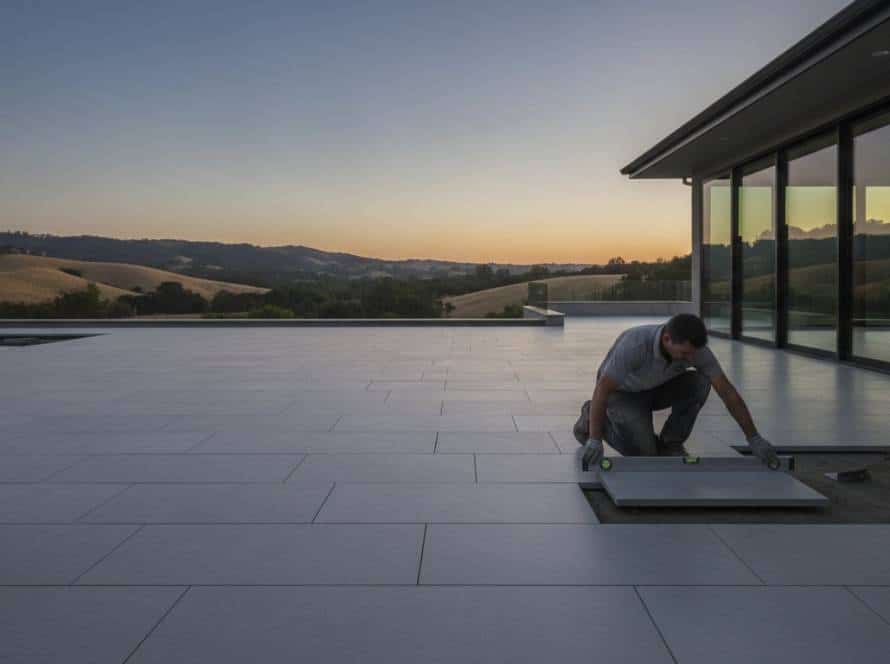
A front yard covered in pavers isn’t automatically easier to manage. The right front yard paver installation Concord homes need starts with the property’s drainage, slope, and intended use. A practical layout can combine paved routes with planting or turf where it makes sense.
It’s reasonable to want a clean, finished entry without creating a new list of upkeep concerns. Choosing between a walkway, a wider paved entry, or a mix of pavers and softer surfaces depends on how you use the space, where water flows, and how steep the approach is. Material and joint choices also affect the care a paved area may need.
This guide compares front yard layouts and surface options for Concord homes, including where permeable pavers or synthetic turf may fit. You’ll also find site checks to make before settling on a design and questions to ask about base preparation, drainage, project scope, and pricing. A design consultation can help connect those decisions to your property and create a plan that is easier to maintain.
Key Takeaways
- Start with how you use the front yard, then assess grading and runoff before choosing a paver layout.
- Compare walkway, entry, and mixed-surface ideas against your property’s access, slope, and upkeep needs.
- For front yard paver installation Concord homeowners should compare standard pavers, permeable pavers, and synthetic turf by intended use, maintenance, and drainage requirements.
- Record existing surfaces, site access, and work-area logistics so you can review a clear project scope with an installer.
- Ask about project communication, written pricing, and warranty terms. A design consultation can help match materials and layout to your site.
Front Yard Paver Installation in Concord: What Makes a Low-Maintenance Plan Work?
A low-maintenance front yard is not necessarily a fully paved one. It’s a planned mix of durable paved areas and planted or turf-covered spaces that are practical to manage. Pave where a firm, reliable surface improves access or supports everyday use, and keep other areas suited to your household and property.
Start with the layout, grading, drainage, and intended use, not the paver color. A path to the front door has different requirements from a sitting area or driveway approach. Slope and runoff routes also affect how water moves around the home. Once those conditions are understood, you can evaluate appearance and materials in context. If water management is a priority, learn how permeable paving systems are designed to let water pass through the paved surface.
Quotable definition: Durable pavers rely on a properly prepared base and a drainage plan suited to the site. These fundamentals help the installation perform over time.
Low maintenance means less routine work, not zero upkeep. Paved areas may need occasional cleaning and joint care, while planted or turf-covered sections have their own maintenance needs. Factor in that ongoing effort before installation begins.
Which front yard areas benefit most from pavers?
Entry paths and other frequently used routes are natural candidates for a defined paved surface. A small sitting area may also suit pavers if there is enough space and the ground conditions support it. These are options, not rules. A mixed layout can preserve planted or turf-covered areas instead of paving the whole yard.
Keep the project scope clear. Bayside Pavers installs pavers and turf. Homeowners should coordinate planting design or other work with the appropriate provider. For homeowners planning larger structural alterations alongside their outdoor landscaping, consulting experienced specialists such as home extension builders Abergavenny can provide inspiration on managing integrated residential design and construction.
What Concord site conditions should homeowners assess first?
Before choosing a layout, note the slope, where runoff travels, existing surfaces, installation access, and how you expect to use the finished area. Ask the installer to assess the site instead of relying on assumptions about soil or drainage. These details can shape material and layout decisions.
Check applicable requirements with the City of Concord before work starts. New driveways or substantial expansions that affect drainage or increase impervious surface may require permits, so don’t assume a front yard project is automatically exempt. Confirm requirements with the City’s Building Division.
For front yard paver installation Concord homeowners can plan with confidence, make the site review part of the design conversation. It can identify constraints early, before a preferred look becomes a poor fit for the property.
Four Paver-Led Front Yard Ideas for a Cleaner, Easier-to-Maintain Look
These concepts are starting points, not guaranteed fits for every Concord property. Match the layout to how you use the yard, then review access, slope, runoff, and existing surfaces before choosing materials. Each idea can be adjusted to the available space without paving every open area.
1. Defined entry path with a compact paver landing
Create a clear route from the sidewalk or driveway to the front door, then add a landing sized for the entry. This provides a practical transition without turning the whole yard into hard surface. Consider how people approach the home, whether the route crosses a slope, and where water travels. Joints and the surrounding area may need periodic attention.
2. Pavers paired with synthetic turf
Use pavers to define walking zones and synthetic turf for a softer-looking area alongside them or within a deliberate layout. This can make the yard feel organized while limiting turf to a specific zone. Review the area’s shape, transitions between surfaces, site access, and runoff routes. For material and installation considerations, see this synthetic turf installation guide.
3. Permeable pavers in a defined front-yard zone
Permeable pavers may be worth discussing for a path or other paved area where managing surface runoff is a concern. The U.S. Environmental Protection Agency explains how permeable pavement can help manage stormwater and filter out pollutants. It is not a universal drainage fix. Site conditions, intended use, and the full drainage plan still need assessment. Ask how the proposed approach fits your property.
4. A compact paved sitting area
If the front yard has room for a small place to sit, a defined paved area can support that use without extending paving across the entire frontage. Think about how people will reach it, how it connects to the entry path, and whether the ground is sloped. Routine care is still needed to keep the surface clear, so consider the area’s size and placement carefully.
A design consultation can help test which layout and surface combination suits your site for a successful front yard paver installation in Concord. Explore Bayside Pavers’ design consultation to discuss paver and turf options for your front yard.
Pavers, Permeable Pavers, or Turf: Compare the Right Fit for Your Front Yard
Each surface serves a different purpose. Compare how you’ll use the area, what upkeep you’re comfortable with, and how the proposed installation will handle water on your property. For front yard paver installation Concord projects, no material choice replaces a site-specific grading and drainage plan.
| Option | Intended use | Upkeep to consider | Drainage and questions to ask |
|---|---|---|---|
| Standard pavers | Entry paths, landings, and other defined hardscape areas. | Expect occasional surface cleaning. Joint care depends on installation details and site conditions. | Where will runoff go? How will the layout meet existing surfaces and slopes? |
| Permeable pavers | Paved areas where a system designed to let water pass through the surface may suit the site. | Ask what care the specific surface and joints may need over time. | How is the base designed to manage water? Where does water move after passing through the surface? |
| Synthetic turf | A defined area where a consistent, softer-looking surface is preferred over paving. | Ask what routine cleaning or care is appropriate for the selected turf. | How will the base and surrounding grades handle water? Is turf suitable for this location and intended use? |
Surface selection depends on intended use, site conditions, and maintenance preferences. A walkway may call for a firm paved route, while a separate area may be better suited to turf. Permeable paving can be considered where water movement is a priority, but it is not a cure-all. The site’s slope, base design, and drainage plan all matter.
When standard pavers may be the practical choice
Standard pavers can suit a defined path, entry landing, or other hardscape zone where you want a clear, durable walking surface. For homeowners tying entryway hardscaping into broader home improvements, full-service remodeling contractors like Lux Renovations suggest aligning paver textures and tones with the primary exterior architectural finishes. Compare color, shape, and pattern with the home’s exterior, then ask how the proposed layout handles transitions and runoff. Cleaning and joint upkeep can vary with installation details and site conditions, so clarify expectations before choosing.
When permeable pavers or synthetic turf deserve consideration
For permeable paving, ask the installer to explain the base design, intended water route, and how site conditions inform the plan. Turf is a distinct surface choice, not a substitute for every planted or landscaped area. Consider where it fits your use and how it meets adjacent pavers. For broader material and contractor selection guidance, read the Bay Area paver installation guide.
Compare options against your actual site rather than choosing by appearance alone. A clear discussion of use, upkeep, and water movement can narrow the choices before you finalize a layout.

Plan a Concord Front Yard Paver Project: Site Checks and Questions to Ask
A useful site assessment starts with your priorities, then moves through conditions, materials, and the written scope. Use this checklist to prepare for a design conversation and compare proposals for front yard paver installation Concord projects.
- Document how you use the yard. Note daily routes to the entry, areas where you’d like a sitting space, and surfaces that feel awkward or hard to access. List your maintenance priorities, too. Photos can help show existing surfaces, visible slopes, and places where water appears to collect or flow.
- Review access and site conditions. Discuss how people and installation materials will reach the work area. Point out slopes, runoff routes, existing paving, turf, or other surfaces that may meet the new work. Ask the installer to assess grading and water movement on site rather than assuming conditions from a distance.
- Compare surface options for the intended use. Ask whether standard pavers, permeable pavers, or synthetic turf fit the areas you’ve identified. For permeable paving, ask how the proposed base design and site conditions relate to water movement. Don’t assume any option is suitable until the property has been reviewed.
- Verify local requirements and work logistics. Contact the appropriate City of Concord authority to confirm whether requirements apply to your project. Treat permits, drainage, and frontage rules as items to verify, not assumptions. Also ask how the work area will be accessed, which existing surfaces are included in the scope, and what preparation you’ll need to handle before work begins.
- Review the written scope before approving work. Confirm that the proposal describes materials, labor, project management, site preparation, drainage planning, installation, and exclusions. Ask who will oversee the project, how updates will be communicated, what warranty terms apply, and what the schedule assumes. Compare proposals on the same details so you can see where scope or oversight differs.
Prepare for the design conversation
Bring your photos, notes, and questions about access, slope, and runoff. Share the intended use for each area and explain which upkeep tasks you want to reduce. A focused conversation can help narrow layout and material choices without presuming that a particular surface will work for your site.
Make the written scope easy to understand
Look for clear inclusions and exclusions, not just a total project description. Bayside Pavers provides upfront all-inclusive pricing covering project management, labor, and materials, along with a dedicated project manager. For broader planning context, review the complete hardscape design and installation guide.
Ready to discuss your front yard layout and site conditions? Request a paver design consultation.
Choose a Concord Paver Installer with a Clear Process and Accountable Follow-Through
A well-planned layout still depends on clear execution. Compare installers on how they assess the site, document the work, communicate during the project, and explain warranty coverage. For front yard paver installation Concord homeowners can compare proposals more confidently by checking that each one addresses the same project details.
- Relevant experience: Ask about similar paver, permeable-paver, or turf installations and how the installer evaluated site conditions.
- Project communication: Find out who your point of contact will be and how you’ll receive updates.
- Written scope: Confirm the work, materials, labor, project management, and exclusions are clearly described.
- Warranty terms: Request the written terms, including what’s covered and any conditions that apply.
- Schedule assumptions: Ask what the proposed timeline depends on and how changes or delays will be communicated.
Bayside Pavers lists a 25-year warranty. Confirm the current terms and how they apply to your specific project before relying on that coverage.
What Bayside Pavers’ project process includes
The process has three practical parts: a free design consultation to discuss the property and project goals, upfront all-inclusive pricing covering project management, labor, and materials, and a dedicated project manager for every build. Ask how those steps will apply to your scope and who will answer questions as work progresses.
Most projects are completed within three weeks, but that is not a guaranteed schedule. Confirm the current timeline for your project and ask what site conditions or scope decisions could affect it.
Turn your front yard ideas into a project plan
Bring site photos, the areas you want to use, access needs, and questions about paver or material options to the consultation. Final layout and drainage decisions should reflect an assessment of the actual property, not assumptions based on photos alone. Make sure the written scope captures the decisions you agree on.
Bayside Pavers provides paver and hardscaping services for residential outdoor spaces in the San Francisco Bay Area, including Concord, Lafayette, Moraga, Walnut Creek, Clayton, Orinda, Pleasanton Hill, San Ramon, Danville, Livermore, Martinez, Napa, Benicia, Petaluma, Novato, Santa Rosa, and Rohnert Park. Request a free design consultation to discuss your property’s layout, material options, and project scope.
Build a Front Yard Plan That Fits Your Property
A low-maintenance front yard starts with the right balance of paved areas and softer surfaces. Choose materials around how you’ll use the space, and assess slope and drainage before settling on a final layout. These steps help make front yard paver installation Concord homeowners can plan with greater confidence.
Clear expectations matter, too. Bayside Pavers offers free design consultations, upfront all-inclusive pricing covering project management, labor, and materials, and a dedicated project manager for every build. The company lists a 25-year warranty. Confirm the applicable terms for your project before proceeding.
Bring site photos, preferred uses, and questions about materials and runoff to start a focused conversation. Request a free design consultation to discuss your property’s layout and project scope.
Frequently Asked Questions
What is the best low-maintenance front yard landscaping for a Concord home?
The best low-maintenance plan depends on your property, how you use the yard, and how much upkeep you’re comfortable with. For front yard paver installation Concord homeowners can consider pavers for paths and entry areas, with permeable pavers or synthetic turf for other suitable zones. Before choosing, ask an installer to assess grading, drainage, access, and existing surfaces so the layout reflects actual site conditions.
Are pavers a good choice for a front yard?
Yes, pavers can suit defined entry paths, landings, and other hardscape areas when the layout fits the property. Their performance depends on appropriate site preparation, installation, and attention to water movement. Consider how the surface will be used and what upkeep it may need. Before committing, ask a local installer to review the slope, existing surfaces, and drainage plan for your Concord home.
Do permeable pavers prevent drainage problems?
No. Permeable pavers allow water to pass through the surface, but they don’t automatically solve drainage problems. The base design, grading, soil conditions, and route water takes through or away from the area all matter. Ask the installer to explain how the proposed system is designed for your site and what limitations apply. Confirm any relevant local requirements with the appropriate Concord authority before work begins.
How do you choose between pavers and synthetic turf for a front yard?
Choose based on what each part of the yard needs to do. Pavers can define a walking route or entry surface, while synthetic turf provides a distinct, softer-looking surface for an area where it suits the intended use. Compare upkeep, appearance, drainage, and how the materials meet at their edges. A site assessment can help determine whether one option or a combination fits your property.
Do front yard paver projects in Concord require a permit?
Permit requirements depend on the project scope and property conditions, so don’t assume a permit is either required or unnecessary. Check with the City of Concord or the relevant authority before work starts. Ask the contractor which parts of the proposed project may need review, but verify requirements directly with the city. Confirming early can help you plan the scope and schedule with fewer surprises.
How long does front yard paver installation take?
Timing depends on the design, site preparation, access, project scope, and conditions encountered during the work. Bayside Pavers reports that most projects are completed within three weeks, but this isn’t a guaranteed schedule for every front yard. Ask for a timeline based on your property and written scope. Clarify what could affect the schedule and how changes or delays will be communicated.
What should I ask a Concord paver installer before hiring?
Ask how the installer assesses grading, drainage, access, and existing surfaces, then review what the written scope includes for materials, labor, and project management. Confirm who will oversee the work, how project updates will be handled, and what warranty terms apply. Request a schedule based on your site, not a general estimate, and verify any local requirements with the appropriate Concord authority before construction begins.

Article by
Adriana Esposito
Adriana Esposito is the owner of Bayside Pavers, a woman-owned outdoor living company serving the San Francisco Bay Area. With over 16 years of experience, she specializes in designing and building custom paver patios, driveways, outdoor kitchens, retaining walls, artificial turf, and other outdoor living spaces. Through this blog, she shares expert tips, design inspiration, and practical advice to help homeowners create beautiful, lasting outdoor spaces.