Designing an outdoor living space in the San Francisco Bay Area is often more about navigating red tape and labor premiums than picking out stone veneers. You likely already know that a high-end fire feature can significantly boost your home’s value and utility. However, it’s just as likely that you’re concerned about the local labor market and the shifting regulations surrounding wood-burning vs. gas installations. The reality is that the cost to build a fire pit bay area involves more than just materials; it requires a disciplined approach to permitting, safety setbacks, and site preparation.
We understand that transparency is the only way to build trust in a high-stakes construction market. This guide provides a clear, all-inclusive look at what you can expect when planning your project in 2026. We’ll examine the latest BAAQMD wood-burning restrictions, essential safety codes for residential zones, and the specific material choices that impact long-term durability. By the end of this article, you’ll have a methodical roadmap to navigate the complexities of Bay Area hardscaping with total confidence and the security of a well-managed investment.
Key Takeaways
- Identify the specific labor and logistics factors that contribute to the “Bay Area Premium” in professional hardscaping.
- Navigate complex local regulations, including BAAQMD wood-burning restrictions and “Spare the Air” day compliance.
- Evaluate how site conditions in hilly regions and material selections like pavers or natural stone impact your project’s bottom line.
- Understand the total cost to build a fire pit bay area through an all-inclusive pricing model that prevents budget creep.
- Secure your investment with a 25-year warranty and a dedicated project manager to ensure a streamlined three-week installation.
Understanding Fire Pit Costs in the San Francisco Bay Area
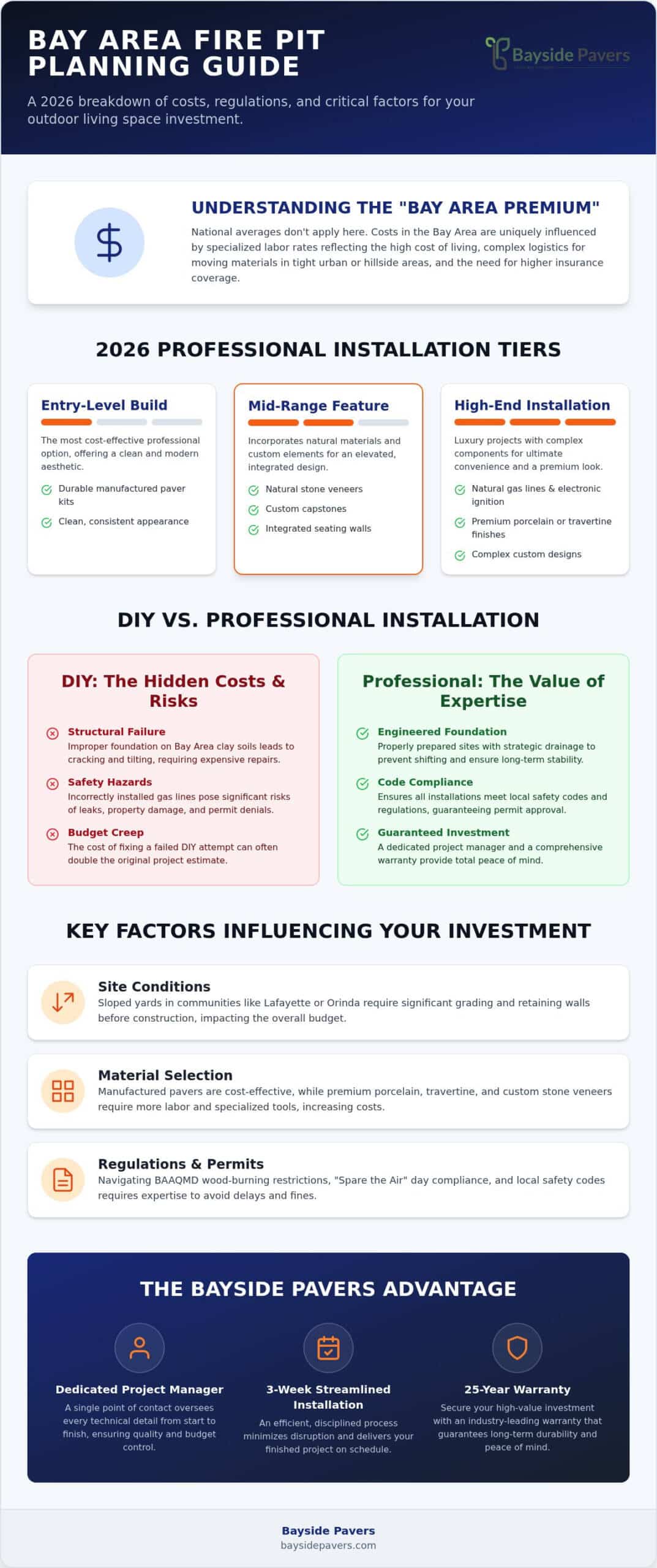
National pricing data often fails to account for Northern California’s economic reality. When calculating the cost to build a fire pit bay area, homeowners must factor in the “Bay Area Premium.” This isn’t just a buzzword; it represents specialized labor rates that reflect the local cost of living and the logistical hurdles of moving heavy masonry through tight urban corridors or steep hillside properties. Professional hardscaping in this region requires a higher level of precision, specialized equipment, and insurance coverage than in other parts of the country.
A fire pit purchased from a big-box retailer might seem like a bargain at first glance. However, these thin-walled units lack the structural integrity and aesthetic cohesion of a custom masonry build. Custom features are designed as permanent architectural elements. They integrate seamlessly into your existing patio or deck, serving as a durable anchor that increases property appraisal values. In the competitive Bay Area real estate market, a professionally installed fire feature is a high-demand amenity that sets a home apart from standard listings.
The 2026 Price Range for Professional Installation
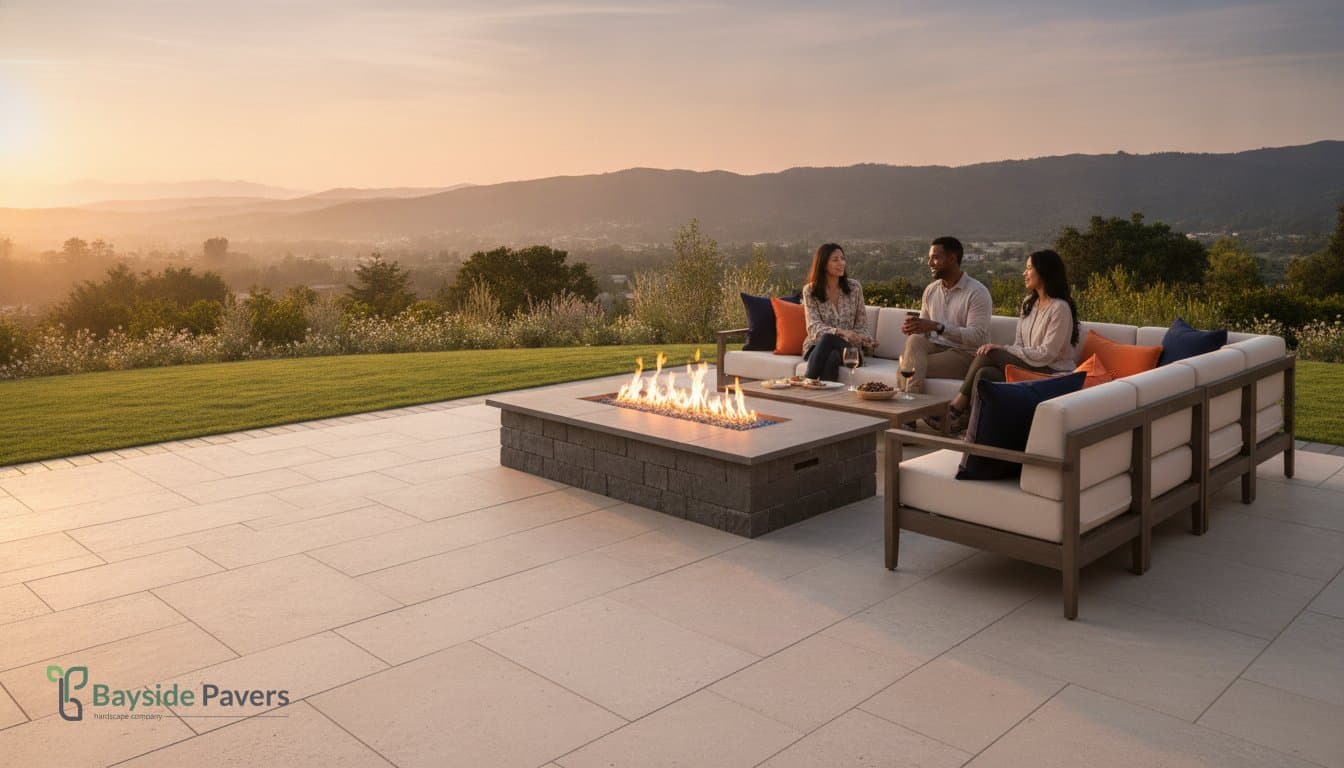
Professional projects generally fall into three distinct tiers. Entry-level builds typically utilize durable paver kits that offer a clean, modern look. Mid-range features incorporate natural stone veneers, custom capstones, or integrated seating walls. High-end installations often include complex components like natural gas lines, electronic ignitions, and premium porcelain finishes. Inflation has impacted the supply chain for materials like natural stone significantly over the last two years. If you live in San Francisco or on the Peninsula, logistical constraints often dictate the budget. Limited street parking and narrow access points require smaller equipment and more manual labor. These factors increase the hours required for material transport and site prep, making professional management essential for budget control.
Why DIY Often Costs More in the Long Run
The temptation to handle the installation yourself often leads to expensive corrections later. Local clay soils are notorious for expansion and contraction. Without a professionally engineered foundation and strategic drainage, a heavy stone feature will crack or tilt within a few seasons. Gas line installation is another area where DIY poses a massive financial and safety risk. Improperly sealed lines or incorrect pressure regulators are dangerous hazards that lead to permit denials or property damage. When you calculate the total cost to build a fire pit bay area, the price of fixing a failed DIY attempt often doubles the original estimate. Professional installation eliminates these variables. We provide a dedicated project manager to oversee every technical detail from start to finish. This ensures your feature is built to code and backed by a 25-year warranty. It’s the only way to guarantee peace of mind for your investment.
Critical Factors Influencing Your Fire Pit Investment
The cost to build a fire pit bay area isn’t just about the pit itself. It’s about the landscape it inhabits. In hilly communities like Lafayette or Orinda, your budget is often determined by the earth beneath your feet. Sloped yards require significant grading and retaining structures before the first stone is laid. These environmental factors, combined with your choice of materials and infrastructure, create a unique financial profile for every project. We treat each site as a technical challenge that requires a disciplined, engineered solution.
Material Selection and Aesthetic Impact
Your choice of finish material dictates both the visual appeal and the total labor hours required. Manufactured pavers offer a consistent, high-quality look and are often the most cost-effective professional option. For a more elevated aesthetic, many homeowners choose premium porcelain or travertine. These materials require specialized cutting tools and a higher level of craftsmanship to install correctly. They offer superior heat resistance and a sophisticated finish that lasts for decades.
Custom stone veneers add another layer of complexity. Hand-selecting and fitting natural stone pieces is a time-intensive process that increases the overall project timeline. When planning your fire feature, consider how it integrates with the surrounding hardscape. Reviewing a professional paver installation in the Bay Area guide can help you understand how to match your fire pit to a larger patio design. High-end materials create a cohesive look, but they also demand a more rigorous installation process to ensure they don’t crack under thermal stress.
Site Preparation and Accessibility
Accessibility is a hidden cost driver that many homeowners overlook. In narrow Berkeley side yards or dense San Francisco neighborhoods, “limited access” surcharges are common. If standard machinery can’t reach the backyard, material transport must be done by hand or with specialized compact equipment. This adds manual labor hours to the build. We account for these logistics during our initial consultation to ensure there are no surprises during construction.
Structural integrity is non-negotiable. Proper footings are essential to prevent the feature from sinking or shifting over time. This is especially critical for heavy masonry pits. If you’re planning a natural gas feature, proximity to the main gas line is another primary factor. The further the pit is from the meter, the more extensive the trenching and plumbing work will be. Integrated features like seating walls or low-voltage lighting also add value, but they require additional electrical and structural planning. If you’re ready to see how these factors apply to your specific yard, our team at Bayside Pavers can provide a clear, all-inclusive design consultation.
Comparing Fuel Sources: Wood-Burning vs. Gas vs. Propane
Fuel selection is the primary technical decision that shapes the total cost to build a fire pit bay area. While wood-burning units offer a classic campfire feel, the regulatory environment in Northern California has shifted the market toward gas-powered features. Each fuel source carries a different balance of upfront infrastructure investment and long-term operating expenses. We help you weigh these factors to ensure your choice aligns with both your lifestyle and local compliance standards.
Natural Gas: The Bay Area Gold Standard
Natural gas is the preferred choice for permanent, high-end installations. This setup requires professional trenching and plumbing to connect the feature directly to your home’s main gas meter. While this increases the initial project scope, it results in the lowest operating cost over time. You gain the convenience of an instant flame without the mess of smoke or ash. This infrastructure is particularly efficient when planned as part of a broader backyard renovation. For example, many of our clients coordinate fire pit plumbing with an outdoor kitchen installation in San Francisco, allowing both features to share the same utility trenching and permitting process.
Wood-Burning Pits: Traditional Charm with Modern Hurdles
Wood-burning pits are becoming increasingly rare in new Bay Area residential constructions due to strict air quality mandates. The Bay Area Air Quality Management District (BAAQMD) prohibits wood burning in new buildings, and existing pits are subject to “Spare the Air” day restrictions. If you choose wood, you must account for significant safety setbacks. Local codes typically require a clearance of 15 to 25 feet from any structure, fence, property line, or overhanging branches. You also face the ongoing labor of ash removal and the logistical requirement of dedicated dry wood storage. These factors often make wood less practical than gas for modern urban or suburban lots.
Propane serves as a functional alternative for those who want gas convenience without the permanence of a dedicated line. However, the recurring cost of tank refills and the aesthetic challenge of concealing the fuel source make it less popular for permanent masonry builds. For a seamless, high-value addition to your home, a plumbed natural gas line remains the most strategic investment. It offers the best balance of safety, regulatory compliance, and ease of use for the Northern California climate.
Navigating Bay Area Permits and Safety Regulations
Compliance is the most overlooked variable when homeowners calculate the total cost to build a fire pit bay area. Ignoring local ordinances doesn’t just risk a fine; it can lead to mandatory teardown orders that void your entire investment. The Bay Area Air Quality Management District (BAAQMD) holds jurisdiction over all residential fire features across the nine-county region. In 2026, these regulations are stricter than ever. Our role is to ensure your project meets every legal benchmark before we break ground.
Local Ordinances and Wood-Burning Bans
The BAAQMD prohibits the installation of wood-burning devices in all new construction projects. If you’re building a new home or a detached ADU, a gas-fueled feature is your only legal option. For existing homes, you must adhere to “Spare the Air” day restrictions. Wood burning is strictly prohibited during these alerts to protect regional air quality. First-time violators face a $100 fine or a mandatory smoke awareness class. Second-time violations result in a $500 fine. Gas fire pits are exempt from these specific burn bans, making them the more reliable choice for year-round use.
Safety setbacks are equally rigid. In cities like Concord and Walnut Creek, fire pits must maintain a minimum clearance of 15 feet from structures, fences, and property lines. Some specific neighborhood zones require up to 25 feet of clearance. These rules prevent accidental ignition of dry vegetation or overhanging branches. We verify these setbacks during the design phase to prevent permit denials later in the process. Clean-burning gas features are the standard for meeting these modern safety requirements.
Permitting for Gas Lines and Hardscapes
Permanent gas fire pits require a building permit and a dedicated plumbing permit for the gas line extension. This process involves a series of mandatory inspections. A city inspector must verify the depth of the trench, the integrity of the pipe materials, and the structural footings of the pit itself. Pressure tests are conducted to ensure there are no leaks before the line is buried. These steps are critical for your home’s safety and your insurance compliance. A licensed contractor is required for these installations to guarantee that the plumbing meets California’s strict building codes.
Managing this paperwork is a core part of our service. We handle the entire permitting and inspection workflow so you don’t have to coordinate with city hall. Our team ensures that every connection is installed by a licensed professional to meet the highest safety standards. If you want a fire feature that is fully compliant and built to last, contact Bayside Pavers to start your project the right way.
The Bayside Pavers Approach: Design, Build, and Warranty
Understanding the total cost to build a fire pit bay area is only half the battle. The other half is ensuring the execution matches your financial commitment. We’ve developed a disciplined three-step system designed to eliminate the typical anxieties of home improvement. Our process starts with a free design consultation, moves into an all-inclusive pricing model, and concludes with a managed construction phase. This structured workflow ensures that your project stays on track and within the agreed-upon scope without the “price creep” common in Northern California contracting.
Efficiency is central to our reputation. Most of our projects are completed within three weeks. We achieve this through the use of a dedicated project manager for every build. This individual serves as your single point of contact, coordinating everything from material delivery to the final inspections we discussed in the previous section. By taking full ownership of the project lifecycle, we protect your time and ensure a level of craftsmanship that allows us to offer a 25-year warranty on all installations. This isn’t just a promise; it’s a structural guarantee of quality.
Integrated Hardscape Design
A fire feature should never feel like an afterthought. We treat it as a core component of your backyard’s architecture. During our initial 3D design consultation, we show you exactly how the new feature will integrate with existing elements or a new retaining wall installation. This visualization allows us to select heat-resistant materials that complement your home’s aesthetic while ensuring long-term thermal stability. We focus on high-performance pavers and stone veneers that can withstand the expansion and contraction cycles of the Bay Area climate without cracking or fading.
Fixed Pricing and Peace of Mind
The fear of hidden costs often stops great projects before they begin. Our all-inclusive pricing model is designed to counter this. When we provide a quote, it covers everything: design, permitting, materials, labor, and site cleanup. You won’t find surprise surcharges for “limited access” or utility trenching halfway through the build. We maintain a strict “no hidden fees” policy for every homeowner we serve. It’s about providing a predictable experience in an unpredictable market.
The process concludes with a rigorous final walkthrough. Your project manager will perform a quality assurance check to verify that every stone is set correctly and every gas connection is secure. We don’t consider the job done until the site is pristine and the feature is fully operational. If you’re ready to transform your outdoor space with a partner that values precision and accountability, schedule your free design consultation with Bayside Pavers today.
Secure Your Investment in Outdoor Living
Navigating the complex landscape of Northern California hardscaping requires more than just a design vision. It demands a thorough understanding of BAAQMD wood-burning restrictions and the technical requirements of sloped-site construction. By prioritizing natural gas features and high-performance materials like pavers or porcelain, you ensure your outdoor space remains compliant and functional for decades. A well-executed fire feature is a strategic addition that anchors your patio and boosts your property’s long-term market appeal.
The total cost to build a fire pit bay area shouldn’t be a moving target or a source of stress. We eliminate the typical anxieties of construction through our fixed-price guarantee and a dedicated project manager who oversees every technical detail from permitting to the final walkthrough. Every installation is backed by our 25-year installation warranty to provide absolute peace of mind for your investment. We’re here to turn your concept into a durable reality with zero hidden fees.
Ready to start? Get Your Free All-Inclusive Fire Pit Estimate and take the first step toward a professionally managed backyard transformation. Your ideal outdoor retreat is within reach.
Frequently Asked Questions
Do I need a permit to build a fire pit in the Bay Area?
Yes, a permit is required for any permanent fire feature in California. Residential gas fire pits necessitate both building and plumbing permits to ensure safety compliance. Permit fees typically range from $25 to $200, though some jurisdictions may charge up to $500 for complex projects. When calculating the cost to build a fire pit bay area, you must factor in these administrative fees. We manage this entire permitting workflow to prevent any legal or insurance delays.
Can I have a wood-burning fire pit in San Francisco or San Jose?
New wood-burning devices are prohibited in the Bay Area as of 2026. If you’re constructing a new home or ADU, you must install a gas-fueled feature to meet local air quality standards. While existing wood-burning pits are technically allowed in some older residential zones, they’re subject to strict burn bans. Most homeowners choose natural gas to avoid the logistical hurdles of ash disposal and wood storage while ensuring they can use their feature year-round.
How much does it cost to run a gas line to a backyard fire pit?
Running a natural gas line typically costs between $15 and $50 per linear foot. This range accounts for the trenching, pipe materials, and professional plumbing labor required to connect the feature to your main meter. The total cost to build a fire pit bay area is significantly impacted by the distance between your home and the pit. Choosing a location closer to existing utility lines can reduce the infrastructure investment required for your new outdoor feature.
How far must a fire pit be from a house in California?
California fire codes require a minimum setback of 15 feet from any structure, property line, or combustible material. In specific East Bay cities like Walnut Creek, local ordinances may extend this requirement to 25 feet depending on your lot’s proximity to dry vegetation or overhanging branches. These regulations are designed to prevent accidental ignition and ensure fire department access. We verify your specific municipal setbacks during the design phase to ensure your installation is fully compliant.
Does a fire pit add value to my Bay Area home?
A professionally installed fire feature significantly increases property value in the Northern California market. Outdoor living spaces are high-demand amenities that extend the usable square footage of your home. Because the local climate allows for year-round outdoor entertaining, features like custom fire pits and integrated seating offer a high return on investment. They serve as a focal point for potential buyers, setting your property apart from listings that lack developed hardscape environments.
What is the best material for a long-lasting fire pit in the North Bay?
Heat-resistant pavers and natural stone veneers are the most durable options for the North Bay’s climate. These materials are engineered to withstand the thermal stress of frequent use without cracking or shifting. Many modern designs also utilize premium porcelain, which offers a sophisticated aesthetic and superior resistance to fading. Selecting high-quality, non-combustible materials is essential for long-term safety and ensures your fire pit remains a permanent, maintenance-free fixture in your backyard landscape.
How long does it take to professionally build a custom fire pit?
Most professional fire pit installations are completed within three weeks. This timeline includes site preparation, grading, gas line plumbing, and the final masonry work. While complex projects with integrated seating walls or elaborate patio designs may take longer, our dedicated project managers ensure the workflow remains efficient. We prioritize clear communication and rigorous scheduling to minimize disruption to your home. This disciplined approach guarantees that your project moves from design to completion without unnecessary delays.
What happens if I use my fire pit on a Spare the Air day?
Using a wood-burning fire pit on a Spare the Air day results in significant penalties. First-time violators may be required to take a wood smoke awareness class or pay a $100 fine. Second-time violations result in a mandatory $500 fine. These restrictions are enforced by the BAAQMD to protect regional air quality during periods of stagnant weather. Natural gas and propane fire pits are exempt from these bans, allowing you to enjoy your feature anytime without risking local code violations.

Article by
Adriana Esposito
Adriana Esposito is the owner of Bayside Pavers, a woman-owned outdoor living company serving the San Francisco Bay Area. With over 16 years of experience, she specializes in designing and building custom paver patios, driveways, outdoor kitchens, retaining walls, artificial turf, and other outdoor living spaces. Through this blog, she shares expert tips, design inspiration, and practical advice to help homeowners create beautiful, lasting outdoor spaces.