Most homeowners assume the pavers they pick are the biggest expense. The truth is that nearly 70% of your pavers price per square foot investment goes into what you’ll never see once the job is finished. It’s the structural foundation, the precision grading, and the specialized labor that determine if your driveway lasts three years or thirty. When you’re looking at quotes that vary wildly, it’s easy to feel overwhelmed by the lack of transparency in the hardscaping industry.
We understand the anxiety of sticker shock. You deserve to know exactly what you’re paying for before the first shovel hits the dirt. This guide provides a transparent breakdown of material, labor, and site preparation costs specifically for the Bay Area market. You’ll gain the clarity needed to plan your project with total confidence, ensuring your budget aligns with a high-quality, long-lasting result. It’s about moving past the confusion and focusing on the value of professional craftsmanship.
We’ll explore the real-world costs of excavation, the durability of different materials, and why choosing a contractor who prioritizes a meticulous base is the only way to protect your investment. By the end, you’ll know how to spot a “low-ball” quote and why an all-inclusive pricing model is the most reliable way to avoid hidden fees and unexpected delays.
Key Takeaways
- Learn how the “Rule of Thirds” divides your budget between materials, labor, and critical site preparation to ensure a stable foundation.
- Compare the long-term performance and cost-effectiveness of interlocking concrete, classic brick, and modern porcelain for the Bay Area climate.
- Understand the total pavers price per square foot by accounting for often-overlooked expenses like demolition, haul-away, and subgrade stabilization.
- Identify regional cost drivers, such as the expansive clay soil in the East Bay and local permitting requirements in cities like Walnut Creek and Concord.
- Discover how all-inclusive pricing models and dedicated project management protect your investment from the hidden fees common in “low-ball” estimates.
What Determines the Total Pavers Price Per Square Foot in 2026?
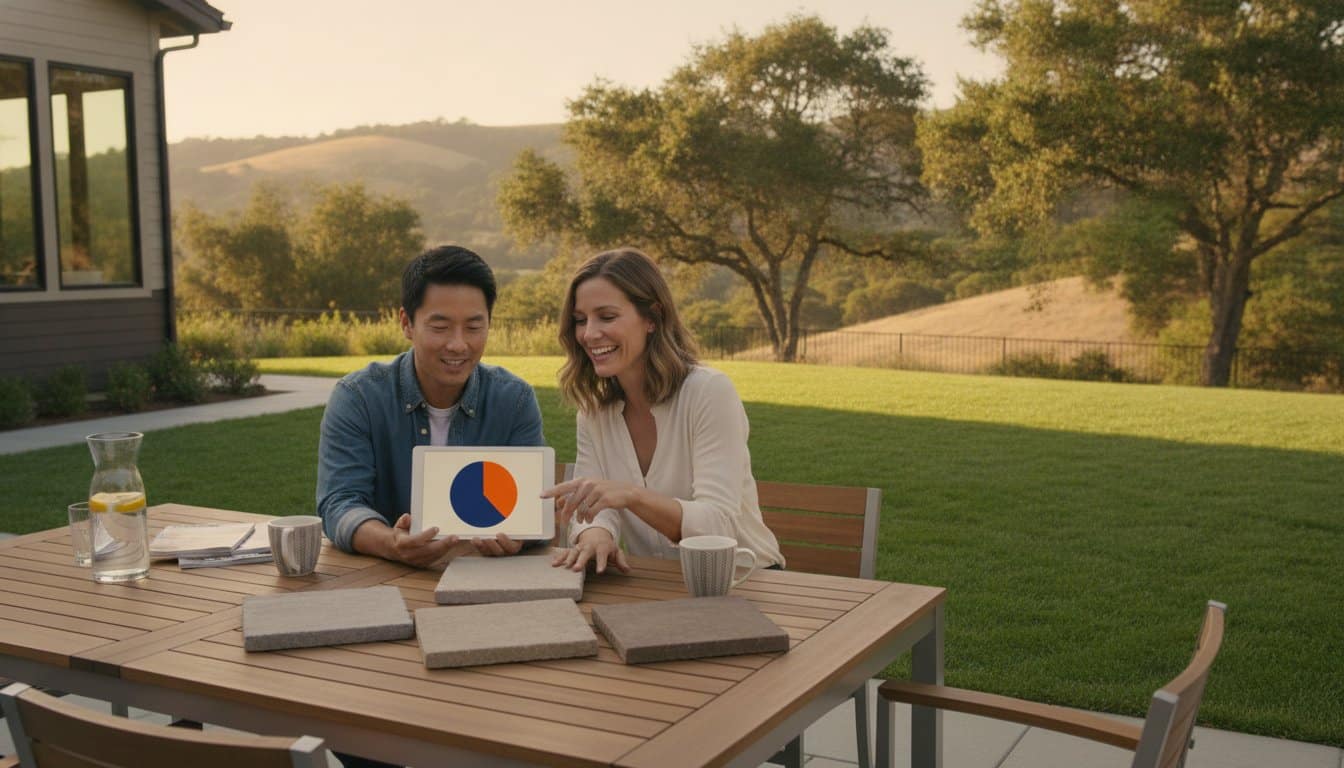
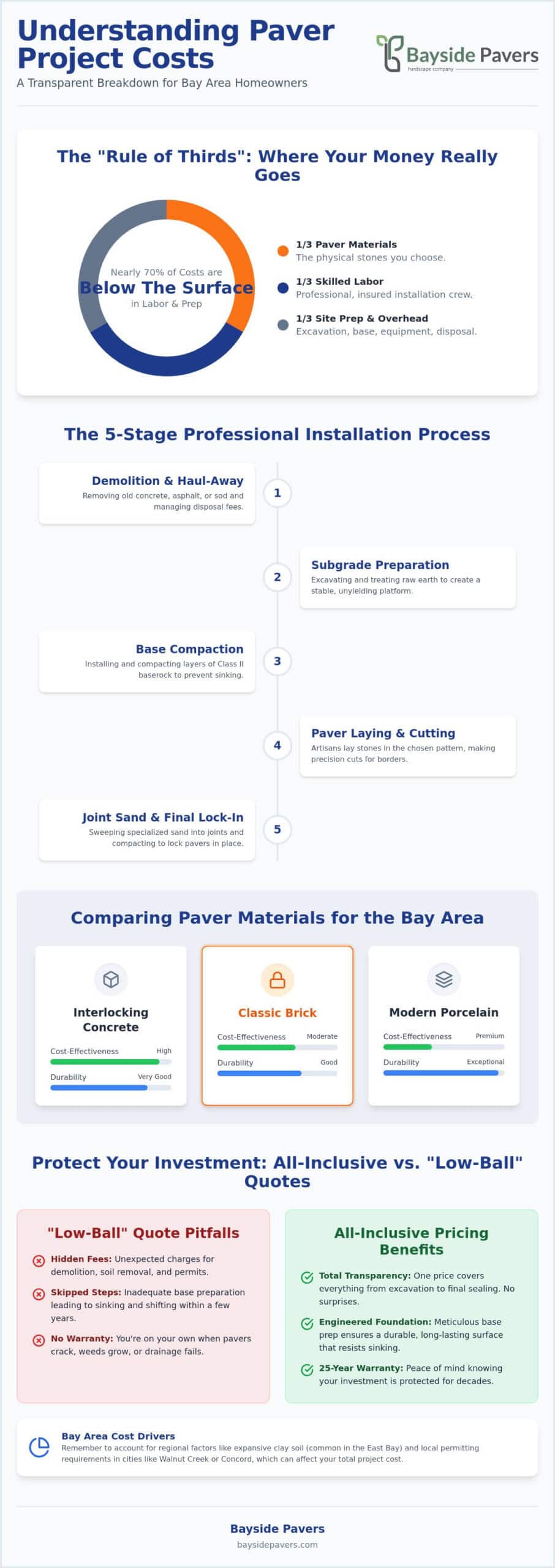
Understanding your pavers price per square foot requires looking past the price tag on a single stone at a big-box retailer. While a Paving stone might only cost a few dollars in a showroom, that represents only a small fraction of the total project. We use a “Rule of Thirds” to help homeowners visualize the budget. Roughly one-third covers the pavers themselves. Another third pays for the skilled labor required for a precise build. The final third goes toward site preparation, specialized equipment, and overhead. This transparent breakdown ensures you aren’t blindsided by a professional quote that reflects the reality of a 2026 installation.
The Bay Area market commands a premium because of high labor rates and the logistical complexity of our local geography. We don’t just “lay stones”; we implement a system-based installation. This methodology treats the entire hardscape as a single engineered unit. From the geotextile fabric to the final joint sand, every component is selected for its ability to withstand the unique pressures of Northern California soil. This approach is the baseline for longevity and the primary reason we can provide a 25-year warranty on our work.
Material Costs vs. Installation Labor
Labor is the engine of a high-quality hardscape. It isn’t just about placing stones on the ground in a pretty pattern. A professional crew manages the intricate geometry of the layout and operates heavy machinery like reversible plate compactors to ensure the earth won’t shift. Choosing a licensed, insured crew over a solo handyman protects your home from liability and structural failure. The expertise required to manage drainage and slope is exactly what you’re paying for in that per-square-foot rate. Professional crews also bring specialized tools that a standard homeowner or general laborer simply won’t have on hand.
The Hidden Costs of Site Preparation
Most of the work happens underground. Excavation involves removing tons of dirt and old concrete, which incurs significant disposal fees in counties like Santa Clara or Contra Costa. Once the area is cleared, we install a multi-layered foundation of Class II baserock and bedding sand. This base is the chassis of your driveway or patio. If your home has a narrow side yard in San Francisco or a steep incline in the East Bay, the complexity of moving these materials increases. These logistical realities are why the pavers price per square foot can vary even between two identical houses on the same street.
Breaking Down the Cost: From Excavation to Sealing
A professional quote isn’t a single line item. It’s a reflection of a rigorous five-stage construction process. When you analyze your pavers price per square foot, you’re looking at the sum of demolition, stabilization, and precision craftsmanship. Each phase carries its own logistical weight and cost drivers. We manage every step to ensure the finished product meets our strict durability standards.
- Demolition and Haul-away: We start by removing existing asphalt, concrete, or sod. This involves heavy machinery and significant disposal fees at local recycling centers.
- Subgrade Preparation: Once the surface is clear, we excavate the raw earth to a specific depth. We treat the soil to ensure it provides a stable, unyielding platform.
- Base Compaction: We install layers of crushed rock, compacting them at specific intervals. This step is the primary defense against future sinking.
- Paver Laying and Cutting: Our artisans lay the stones in your chosen pattern. Intricate borders and curves require manual cuts with diamond-blade saws.
- Joint Sand and Final Compaction: We sweep specialized sand into the joints and use a vibratory plate to “lock” the pavers into the base.
Skipping even one of these steps is how “cheap” installations fail within two seasons. If you want to see how these phases look in a real-world setting, you can explore our pavers installation process to understand our quality standards. We don’t cut corners because your investment deserves a foundation that lasts.
Drainage and Grading Requirements
Water is the enemy of a stable hardscape. We integrate French drains or surface basins to direct runoff away from your foundation. Grading is the process of reshaping the land to create a specific slope that ensures gravity pulls water toward your drainage system. On Bay Area hillsides, this grading is non-negotiable. Ignoring these requirements leads to hydrostatic pressure that causes pavers to heave or shift, forcing expensive repairs later. Proper drainage adds to the initial cost but saves thousands in potential damage.
The Impact of Project Size on Unit Pricing
Economies of scale play a major role in your final bill. Every project carries fixed costs, including permit procurement, equipment delivery, and site mobilization. These “setup” costs are the same whether we’re building a 100-square-foot landing or a 2,000-square-foot driveway. Consequently, the pavers price per square foot typically decreases as the total project area increases. You can optimize your investment by combining multiple hardscape needs into a single mobilization phase to lower the overall unit rate.
Comparing Paver Materials: Concrete, Brick, and Porcelain
Choosing the right material is the first major decision that shifts your pavers price per square foot. While the base preparation remains a constant structural requirement, the surface material dictates both the aesthetic finish and the long-term maintenance schedule. In the Bay Area, we see a clear divide between standard utility and premium architectural finishes. Your choice should align with both your home’s architecture and your tolerance for upkeep.
- Interlocking Concrete Pavers: These are the versatile standard for Northern California. They account for roughly 60% of the market because they balance durability with a wide range of textures. They offer a high return on investment, often recouping nearly 100% of the cost at resale according to the National Association of Realtors.
- Brick Pavers: This classic choice is favored for historical renovations. Fired clay is exceptionally durable and holds its color for decades, making it a reliable choice for high-traffic walkways.
- Natural Stone and Porcelain: These are premium selections for homeowners seeking a modern, high-end look. Porcelain is specifically gaining traction for pool decks due to its slip resistance and frost-proof density.
- Permeable Pavers: These systems are engineered to manage stormwater. They use wider joints filled with small stones to allow water to filter back into the ground, often helping homeowners meet strict local runoff regulations.
Concrete vs. Porcelain: Installed Cost Comparison
The difference between concrete and porcelain isn’t just the price of the tile. It’s the installation technique. Concrete pavers are typically sand-set on a compacted gravel base. Porcelain is much denser and more brittle, requiring specialized diamond-blade saws for every cut and often utilizing specialized pedestal or mortar-set systems. This material is trending in the North Bay because it’s virtually non-porous, meaning it won’t stain from oak leaves or wine spills. For a deeper dive into these premium systems, view our guide on Porcelain Paver Installation in the North Bay.
Permeable Pavers and Environmental ROI
Permeable systems require a more complex “open-graded” base. Instead of standard baserock, we use layers of larger, clean-crushed aggregates that create a reservoir for water. This adds to the initial pavers price per square foot because of the extra excavation and specialized stone required. However, the ROI comes from avoiding expensive underground drainage pipes. In cities like Orinda or Lafayette, where hillside runoff is a major concern, permeable driveways are often the most efficient way to satisfy city “green” requirements while protecting your property from erosion.
Bay Area Specific Cost Drivers: Why Estimates Vary Locally
National price guides often fail to account for the unique geological and economic challenges of Northern California. When you calculate your pavers price per square foot in the Bay Area, you’re paying for more than just materials. You’re investing in a project that must withstand expansive soil, navigate strict city codes, and utilize a highly competitive labor market. These regional factors are why a quote in Concord might look very different from a national average found online.
The “Clay Factor” is the most significant technical challenge we face in the East Bay. Our soil is notoriously expansive. It swells during our wet winters and shrinks during dry summers. A standard installation that ignores this movement will buckle and heave within twenty-four months. We prevent this by excavating deeper and using specialized stabilization techniques. This extra work ensures your driveway remains level regardless of the season.
Labor and logistics also play a critical role in your final estimate. The Bay Area has one of the highest costs of living in the country, which is reflected in the rates for skilled hardscape crews. Furthermore, delivering premium stones to the Napa and Sonoma regions involves complex logistics and higher fuel surcharges. We manage these variables through a dedicated project manager who coordinates every delivery to keep your three-week timeline on track.
Soil Conditions and Structural Integrity
Soil composition dictates the depth of your foundation. A 4-inch base might work for a patio in Florida, but it’s a recipe for total failure in the Bay Area clay. We integrate high-strength geotextile fabric between the raw soil and the baserock. This fabric acts as a structural bridge, preventing your expensive pavers from sinking into the subgrade. Our 25-year warranty protects against the shifting and settling common in our local soil, providing you with long-term peace of mind.
Access and Slope Challenges
Many homes in Orinda and Moraga come with “hillside premiums” due to limited site access. If our heavy machinery cannot reach your backyard, we must move tons of debris and base material by hand. This manual labor increases the square foot rate but is necessary to protect your existing landscape. In these scenarios, a professional Retaining Wall Installation is often required to create a level, usable space for your new pavers. We integrate these structural needs into your total budget to avoid mid-project surprises.
Ready to see what a professional installation looks like on your property? Get an all-inclusive estimate from our expert team today.
Why All-Inclusive Pricing is the Best Value for Homeowners
A low-ball estimate is rarely a bargain. In the hardscaping industry, it’s often a tactical omission of the logistical realities required for a lasting build. When you evaluate your pavers price per square foot, you must look for an all-inclusive figure that covers the entire lifecycle of the project. Many contractors provide “preliminary” quotes that exclude essential costs like debris disposal fees or the high-quality baserock needed for stabilization. These hidden expenses often appear as “change orders” mid-project, ballooning your budget when you’re most vulnerable.
We provide a fixed, all-inclusive pricing model as the antidote to this uncertainty. This approach ensures that every ton of excavated soil, every yard of bedding sand, and every hour of specialized labor is accounted for upfront. Our system is built on a 25-year warranty, which reframes your investment. When you calculate the “cost per year” rather than just the “cost per foot,” a professionally installed system that lasts decades is significantly more economical than a cut-rate installation that requires replacement in five years.
Our disciplined three-step process is designed for efficiency and transparency. We start with a comprehensive design phase, move to a fixed all-inclusive quote, and execute a three-week typical project completion. This repeatable system eliminates the typical anxieties of home improvement by setting clear expectations from day one. You aren’t just buying stones; you’re investing in a managed construction process that respects your time and your financial commitment.
Eliminating Project Management Stress
Managing a construction site is a full-time job that most homeowners aren’t equipped to handle alongside their own careers. We provide a dedicated project manager for every build to serve as your single point of contact. This manager coordinates material deliveries, handles city permits, and oversees the crew to prevent the costly delays common in unmanaged projects. A professional Hardscape Design is the foundation of this efficiency. It serves as a precise blueprint that ensures we meet our three-week completion timeline while maximizing your property’s curb appeal and resale value.
Your Next Steps to an Accurate Quote
Getting an accurate pavers price per square foot starts with a clear understanding of your site’s specific needs. To prepare for a consultation, have a rough idea of your desired square footage and any known drainage issues on your property. When you compare quotes from different providers, look beyond the bottom line. Check for the specific depth of the base, the inclusion of geotextile fabrics, and the details of the labor warranty. A quote that lacks these specifics is a quote that lacks accountability.
For homeowners who want to see a detailed breakdown of how these factors influence the budget, you can discover more about Residential Driveway and Patio Installation to help visualize the various components of a professional quote.
Don’t leave your property’s foundation to chance. Contact our team today to schedule your free design consultation and receive a transparent, all-inclusive quote for your Bay Area project.
Take Control of Your Hardscape Investment
Successful hardscaping requires looking beyond the surface. A professional installation is an engineered system where the foundation is just as critical as the stone you choose. By understanding local Bay Area cost drivers and soil challenges, you’re now equipped to spot “low-ball” quotes that compromise on structural integrity. Your pavers price per square foot should always reflect a complete, all-inclusive service that protects your home’s value for decades.
We eliminate the typical stress of construction with a dedicated project manager and a 3-week typical completion timeline. Every project we build is backed by a 25-year installation warranty, ensuring your peace of mind long after the crew leaves. It’s time to stop guessing and start building with a partner who values transparency as much as craftsmanship. We take full ownership of the process so you can focus on enjoying the result.
Get Your All-Inclusive Paver Quote Today and schedule your free design consultation. We’re ready to help you transform your outdoor living space with the precision and speed your project deserves.
Frequently Asked Questions
Is it cheaper to do pavers or a concrete driveway in the Bay Area?
Poured concrete usually has a lower upfront cost, but pavers provide superior long-term value. Standard concrete slabs frequently crack due to the expansive clay soil found in the East Bay, leading to expensive full-surface replacements. Pavers are individual units that flex with soil movement and allow for simple, localized repairs if a single stone is damaged.
How much does labor typically cost per square foot for paver installation?
Labor typically represents about one-third of your total pavers price per square foot. In high-cost regions like Northern California, this investment covers a licensed crew, specialized compaction equipment, and the technical expertise required for precise grading. Professional labor ensures the structural foundation is built to withstand decades of use without sinking or shifting.
Do I need a permit for a paver patio in Contra Costa County?
Most ground-level paver patios do not require a permit if they don’t involve changes to drainage or grading. However, permits are often necessary in cities like Walnut Creek or Concord for projects involving retaining walls or significant alterations to how water leaves your property. We recommend checking with your local building department to confirm specific municipal requirements before breaking ground.
What is the most durable type of paver for a high-traffic driveway?
Interlocking concrete pavers are the most durable option for residential driveways. They are specifically engineered to support vehicular weight and distribute loads across the entire surface. Their high compressive strength and ability to resist the freeze-thaw cycle make them more resilient than natural stone or traditional brick in high-traffic applications.
How long does a typical 1,000 square foot paver project take to complete?
A 1,000 square foot project typically takes three weeks to complete from start to finish. This timeline includes the demolition of existing surfaces, deep excavation, and the critical multi-layered base preparation. Our structured project management system ensures that each phase moves quickly without sacrificing the precision required for a 25-year warranty.
Does the price per square foot include the cost of removing my old driveway?
An all-inclusive pavers price per square foot should always include the cost of demolition and haul-away. Removing old concrete or asphalt involves heavy machinery and significant disposal fees at regional recycling centers. You should verify that these logistical costs are transparently listed in your quote to avoid unexpected “debris fees” later in the process.
Can I save money by buying the pavers myself and hiring labor separately?
Buying materials yourself rarely results in savings and often complicates the installation. Professional contractors access wholesale pricing and handle the complex logistics of delivery and stone counts. Hiring separate labor also fragments accountability; if the project fails, the installer may blame the material, and the supplier may blame the installation, leaving your investment unprotected.
Are permeable pavers significantly more expensive than standard concrete pavers?
Permeable systems carry a higher initial cost because they require a more complex “open-graded” base. Instead of standard baserock, we use layers of clean-crushed stone to create a reservoir that manages stormwater runoff. While the upfront rate is higher, these systems can save you thousands by eliminating the need for traditional underground drainage pipes and helping you meet local environmental regulations.

Article by
Adriana Esposito
Adriana Esposito is the owner of Bayside Pavers, a woman-owned outdoor living company serving the San Francisco Bay Area. With over 16 years of experience, she specializes in designing and building custom paver patios, driveways, outdoor kitchens, retaining walls, artificial turf, and other outdoor living spaces. Through this blog, she shares expert tips, design inspiration, and practical advice to help homeowners create beautiful, lasting outdoor spaces.